Sponge Cities in India
Author : adminPublished : October 12, 2026
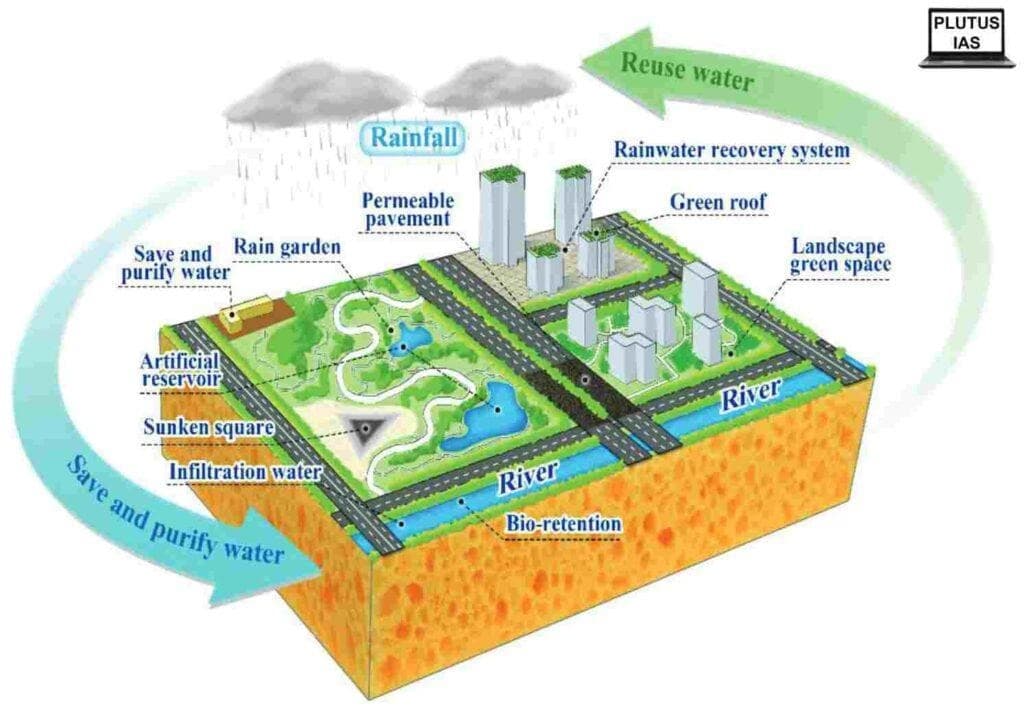
Indian cities are increasingly exploring Sponge City principles to manage heavy rainfall, flooding and water shortages. The approach focuses on using lakes, wetlands, green spaces and rainwater harvesting to absorb and store water naturally. Instead of quickly draining rainwater away, sponge-city planning allows cities to capture, filter and reuse it. Several Indian cities are adopting elements of this approach through water conservation and flood-management projects.
💧 What Is a Sponge City?

A Sponge City is designed to absorb and manage rainwater naturally, much like a sponge. It combines traditional drainage with natural systems such as wetlands, lakes, parks and permeable surfaces. These features help reduce waterlogging while supporting groundwater recharge. The concept also encourages cities to treat rainwater as a valuable resource rather than simply waste.
🏙️ 10 Indian Cities Moving Towards the Sponge-City Approach
1. 🌊 Kolkata, West Bengal

Kolkata’s East Kolkata Wetlands are an important natural water-management system. They help process wastewater while supporting fisheries, agriculture and biodiversity. The wetlands also demonstrate how natural ecosystems can support a large urban area. Their conservation is closely connected with sustainable water management.
Highlights:
- East Kolkata Wetlands
- Natural water management
- Wastewater treatment
- Wetland conservation
- Biodiversity
- Flood resilience
2. 🌧️ Chennai, Tamil Nadu

Chennai faces the challenge of both urban flooding and water scarcity. Rainwater harvesting and restoration of lakes, ponds and wetlands can help the city manage rainfall more effectively. These measures can also support groundwater recharge. Water-sensitive planning is particularly important for Chennai’s long-term resilience.
Highlights:
- Rainwater harvesting
- Lake restoration
- Wetland protection
- Groundwater recharge
- Flood management
- Water conservation
3. 🌿 Bengaluru, Karnataka

Bengaluru has a historic network of lakes and interconnected drainage channels. Urban growth has placed pressure on many of these natural water systems. Lake restoration, rainwater harvesting and protection of drainage corridors can improve water management. The city’s lakes remain an important part of its blue-green infrastructure.
Highlights:
- Historic lake network
- Lake restoration
- Rainwater harvesting
- Wetland conservation
- Groundwater recharge
- Natural drainage
4. 🌴 Mumbai, Maharashtra

Mumbai’s coastal location and heavy monsoon rainfall make flood management a major challenge. Mangroves and wetlands can naturally absorb and slow down excess water. Protecting these ecosystems can complement the city’s drainage infrastructure. Nature-based solutions are increasingly important for Mumbai’s climate resilience.
Highlights:
- Mangrove ecosystems
- Coastal wetlands
- Storm-water management
- Flood resilience
- Natural drainage
- Climate adaptation
5. 🌱 Delhi, Delhi

Delhi has numerous parks, lakes, wetlands and green areas that can contribute to better water management. Rainwater harvesting can reduce surface runoff and support groundwater recharge. Protecting natural water bodies is also important as the city becomes increasingly built-up. Green infrastructure can help create a more water-resilient capital.
Highlights:
- Rainwater harvesting
- Urban lakes
- Wetland restoration
- Groundwater recharge
- Green spaces
- Water-sensitive planning
6. 💦 Hyderabad, Telangana

Hyderabad has traditionally depended on a network of lakes and water bodies to collect and manage rainwater. Urban expansion has put pressure on many of these systems. Lake restoration and protection can improve water storage and reduce runoff. Preserving these traditional systems is important for the city’s future water security.
Highlights:
- Historic lake systems
- Lake conservation
- Rainwater storage
- Natural drainage
- Groundwater recharge
- Flood management
7. 🌳 Pune, Maharashtra

Pune’s rivers, streams and surrounding watershed play an important role in managing rainfall. Rapid development makes the protection of natural drainage channels increasingly important. Rainwater harvesting and green infrastructure can help reduce runoff. A watershed-based approach can strengthen the city’s flood resilience.
Highlights:
- River landscape
- Watershed management
- Rainwater harvesting
- Stream conservation
- Green infrastructure
- Flood resilience
8. 🌿 Bhubaneswar, Odisha

Bhubaneswar’s green spaces and water bodies provide natural opportunities for managing rainfall. Ponds and wetlands can temporarily hold excess water and support groundwater recharge. Protecting these areas is important as the city develops. Green infrastructure can also improve the city’s climate resilience.
Highlights:
- Urban greenery
- Natural water bodies
- Wetland conservation
- Rainwater management
- Sustainable drainage
- Climate resilience
9. 🌊 Ahmedabad, Gujarat

Ahmedabad’s relationship with the Sabarmati River makes water management an important part of urban planning. Rainwater harvesting and groundwater recharge can improve the city’s water resilience. Green public spaces can also help manage surface runoff. Water-sensitive development can support a more sustainable urban future.
Highlights:
- Sabarmati River
- Water management
- Rainwater harvesting
- Groundwater recharge
- Green public spaces
- Sustainable planning
10. 🌧️ Surat, Gujarat

Surat’s location near the Tapi River makes effective drainage and flood management important. Rapid urban development increases the need for better rainwater planning. Water-body protection and improved drainage can help manage heavy rainfall. Combining natural and engineered systems can strengthen the city’s resilience.
Highlights:
- Tapi River
- Urban drainage
- Flood management
- Rainwater management
- Water-body protection
- Climate resilience
🌱 Why Sponge Cities Matter

Sponge-city planning can help Indian cities become greener, safer and more water-resilient. By combining natural ecosystems with modern infrastructure, cities can better manage extreme rainfall. The approach can also improve groundwater resources and urban biodiversity. It offers a practical way to prepare cities for a changing climate.
Key Benefits:
- Reduced flooding
- Groundwater recharge
- Rainwater storage
- Wetland protection
- More green spaces
- Climate resilience
✨ Final Thoughts
A Sponge City does not fight rain—it learns how to live with it. By protecting lakes, wetlands, rivers and green spaces while improving modern infrastructure, Indian cities can manage water more intelligently. From Kolkata’s wetlands to Bengaluru’s lakes and Mumbai’s mangroves, these approaches show how working with nature can help build a more resilient urban future.
Latest Post
 Sponge Cities in India
10/12/2026
 Silent City in India
10/11/2026
 Romantic Cities in India
10/10/2026
 Sports Cities in India
10/9/2026
 French City in India
10/8/2026
 City of Mountains in India
10/7/2026
 French City in India
10/6/2026
 City of Forts in India
10/5/2026
 City of Pearls in India
10/4/2026
 City of Gates in India
10/3/2026
 City of Bridges in India
10/2/2026
 City of Black Diamond in India
10/1/2026
 Muslim Cities in India
9/30/2026
 Gold City in India
9/29/2026
 Gambling City in India
9/28/2026