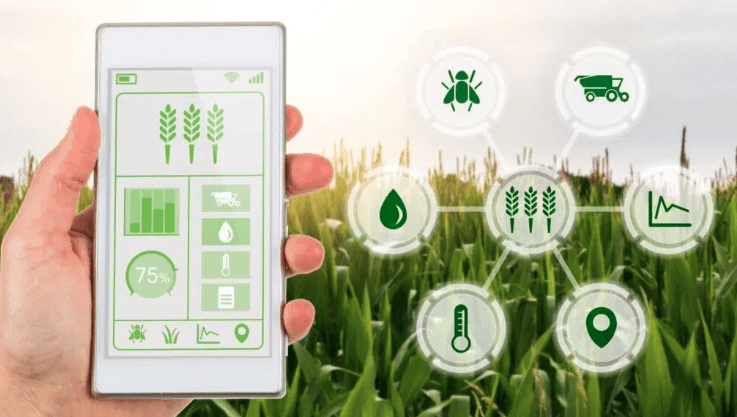
Smartest village in India
Author : adminPublished : February 24, 2026
In a quiet village on the outskirts of Nagpur, farmers no longer guess when to irrigate their fields. Schoolchildren attend digitally enabled classrooms linked to advanced curricula. Health workers perform diagnostic tests that once required district hospitals. Streetlights switch on and off automatically, waste bins signal when they are full, and drones buzz overhead—not for spectacle, but for precision agriculture.
Satnavri, a small village in Nagpur Rural, Maharashtra, officially declared India’s first “Smart & Intelligent Village” in August 2025. Unlike earlier “smart village” pilots that focused on limited digitisation or infrastructure upgrades, Satnavri represents a full-stack transformation of rural life, integrating artificial intelligence, satellite data, Internet of Things (IoT) devices, drone services, fibre connectivity, and digital governance into one cohesive ecosystem.
What makes Satnavri especially significant is not just the technology deployed, but how quickly and comprehensively it was implemented. In just nine weeks, a consortium of Indian technology companies—working in collaboration with the Maharashtra government—converted an ordinary agrarian settlement into a living laboratory of rural digital transformation.
This article explores how Satnavri was built, what technologies power it, how villagers actually use these systems, the economic and social impact, the challenges involved, and whether this model can realistically be replicated across India’s 6.5 lakh villages. Rather than treating Satnavri as a futuristic showcase, this analysis examines it as a serious policy and development experiment—one with enormous promise, but also important questions.
| population of Maharashtra | literacy rate of Maharashtra | sex ratio of Maharashtra |

The Making of India’s First Smart Village
Why Satnavri Was Chosen
Satnavri is located about 35 kilometres from Nagpur city, placing it close enough to urban infrastructure for technical support, yet far enough to reflect the realities of rural India. With a population of roughly 1,800 residents, the village offered a manageable scale for experimentation while still being large enough to test real-world complexity.
Several factors made Satnavri an ideal candidate:
- A self-contained village ecosystem with agricultural land, a pond, a school, and an anganwadi
- Reasonable road connectivity
- A cooperative gram panchayat and community openness to technology
- Typical agrarian livelihoods representative of thousands of villages across Maharashtra
The aim was not to select a “model village” already ahead of the curve, but a normal rural settlement where the impact of technology could be clearly measured.
The Nine-Week Transformation
The project timeline itself is remarkable. The concept was presented to the Maharashtra Chief Minister in June 2025, and by August 23, 2025, Satnavri was formally inaugurated as India’s first Smart & Intelligent Village.
This rapid execution was possible because:
- The project was privately funded by the VOICE Consortium, comprising over 25 Indian technology companies
- There was single-window decision-making at the state level
- The village was treated as an integrated system rather than a collection of separate schemes
Unlike many government pilots that take years to materialise, Satnavri demonstrated what is possible when policy intent, private innovation, and local participation align.
The NiralOS Platform: Digital Spine of the Village
At the heart of Satnavri’s transformation lies NiralOS, a rural-optimised digital operating system designed specifically for villages. Rather than deploying isolated apps or dashboards, NiralOS functions as a unified platform, integrating:
- Satellite imagery and weather data
- IoT sensors across agriculture, water, waste, and infrastructure
- AI-driven analytics
- Mobile and web interfaces for villagers and administrators
This platform approach is crucial. It allows different systems—agriculture, health, governance, utilities—to talk to each other, creating efficiencies that siloed solutions cannot.
Smart Agriculture: Precision Farming at Village Scale
Agriculture remains the backbone of Satnavri’s economy, and it is also where the smart village model shows its most immediate and measurable impact.
Sensor-Driven Crop Management
Fields in and around Satnavri are now equipped with soil sensors that continuously measure moisture, nutrient levels, and pH. Farmers receive simple, actionable alerts on their phones:
- When irrigation is needed
- When fertiliser application should be reduced or increased
- When soil health is declining
This replaces intuition-based farming with data-guided decision-making, reducing input costs while improving yields.
Drone-as-a-Service: A Shared Resource Model
One of Satnavri’s most innovative features is its community drone service. Instead of each farmer purchasing expensive equipment, the village operates drones as a shared utility.
These drones are used for:
- Precision spraying of fertilisers and pesticides
- Monitoring crop stress and disease
- Rapid coverage of large areas with minimal labour
Farmers pay per acre, making advanced technology affordable even for small landholders. Early projections indicate:
- Up to 30% reduction in chemical usage
- Significant labour savings
- Improved uniformity in crop treatment
Intelligent Water Management
Water scarcity is a major concern in Maharashtra, and Satnavri addresses it through:
- IoT-enabled water meters
- Smart drip irrigation scheduling
- Pond sensors monitoring water quality for both irrigation and fish farming
Leaks are detected automatically, and pumps can be controlled remotely. Early results show substantial water savings, proving that digital tools can support sustainability without compromising productivity.
Smart Governance and Infrastructure
Technology in Satnavri is not limited to farms—it reshapes how the village is governed and maintained.
Digital Gram Panchayat
The gram panchayat operates through a real-time digital dashboard that tracks:
- Water supply quality
- Streetlight functionality
- Waste collection status
- Energy consumption
This data-driven governance model improves accountability and reduces response time for local issues.
Waste and Energy Management
Satnavri uses smart waste bins with fill-level sensors, enabling optimised collection routes and reducing manual labour. Organic waste is processed in monitored composting units, while recyclable segregation is incentivised through a digital credit system.
Streetlights are IoT-enabled and automatically adjust brightness based on movement and time, cutting energy consumption by more than half.
Village-Level Security
CCTV systems integrated with AI analytics provide:
- Crowd monitoring during events
- Alerts for unusual activity
- Faster emergency response coordination
Importantly, data access protocols are defined to prevent misuse, reflecting an awareness of privacy concerns.
Economic Impact and New Livelihoods: From Welfare to Wealth Creation
One of the strongest tests of any “smart village” initiative is whether it merely digitises existing poverty or creates durable economic value. In Satnavri’s case, early evidence suggests the latter—though the transition is still at a formative stage.
Emergence of new rural professions
Satnavri’s transformation has introduced entirely new categories of work that did not exist in the village earlier. These include:
- Drone service operators, trained locally to manage spraying, crop monitoring, and emergency response
- IoT technicians, responsible for maintaining sensors, connectivity, and edge devices
- Digital agriculture facilitators, who help farmers interpret data dashboards and apply recommendations
- Village system coordinators, acting as intermediaries between residents, technology providers, and the panchayat
These roles are critical because they shift the village economy from labour-only dependence to skill-based participation. Importantly, they also localise maintenance and troubleshooting, reducing long-term dependency on external vendors.
Monetisation and sustainability of services
Unlike many pilot projects that rely entirely on subsidies, Satnavri has experimented with revenue-linked services. Drone spraying, for example, operates on a pay-per-acre model. This approach does three things simultaneously:
- Keeps technology affordable through shared access
- Generates income for trained operators
- Creates a maintenance fund for equipment upkeep
Similarly, water and energy efficiencies reduce household expenditure, indirectly increasing disposable income. Over time, such savings can be as impactful as direct income generation.
Financial inclusion beyond account opening
Satnavri’s financial digitisation goes beyond basic banking access. The integration of biometric kiosks, mobile insurance platforms, and satellite-backed crop risk assessment enables:
- Faster crop insurance claims
- More accurate loan underwriting
- Reduced reliance on informal credit
This represents a quiet but profound shift: credit decisions based on real data rather than collateral alone. For small and marginal farmers, this could be transformative if implemented at scale.
Early indicators of migration reversal
Perhaps the most socially significant outcome is the incipient reversal of rural-to-urban migration. Young villagers who previously sought precarious work in cities are beginning to see viable futures within the village—especially those with technical aptitude.
While it is too early to claim long-term demographic change, Satnavri demonstrates that migration is not inevitable if rural economies can offer dignity, skills, and income.
The Scalability Blueprint: From a Single Prototype to Statewide Transformation

A common criticism of model villages is that they remain isolated showcases. Satnavri’s planners explicitly framed it as a replicable template, not a one-off experiment.
Maharashtra’s multi-village vision
The Maharashtra government has announced an ambitious plan to replicate the model across ten villages per taluka, amounting to nearly 2,900 villages statewide. This scale matters. At this level, smart villages cease to be exceptions and begin influencing regional development patterns.
Why Satnavri’s model is technically scalable
Several design choices improve scalability:
- Modular architecture: Villages can adopt components incrementally—starting with agriculture or water management before full integration
- Common software backbone: NiralOS allows 70–80% of code to remain unchanged across villages
- Bulk procurement advantages: Sensors, devices, and connectivity costs fall sharply at scale
- Local manufacturing and training: Reduces costs while creating regional employment
This contrasts sharply with earlier smart village pilots that relied on bespoke solutions difficult to replicate.
Financing replication: the hardest challenge
While capital expenditure for initial rollout can be supported through CSR funds, state budgets, and innovation grants, operational expenditure remains the key risk. Devices age, software requires updates, and skilled personnel must be retained.
Satnavri’s emerging solution—revenue-generating services funding maintenance—is promising but unproven at mass scale. Long-term success will likely depend on a hybrid model combining public funding, local revenue, and private participation.
Challenges and Critical Analysis: Beyond the Showcase
A credible evaluation of Satnavri requires confronting its limitations openly.
Technical durability and maintenance
High-tech systems are vulnerable to:
- Power fluctuations
- Network outages
- Hardware degradation in rural environments
Without robust local repair ecosystems, villages risk becoming dependent on external technicians—undermining self-reliance. Continuous capacity-building is therefore as important as initial installation.
Social and cultural adoption barriers
Technology adoption is uneven. Elderly residents, landless workers, and digitally hesitant farmers may feel excluded. If smart village systems benefit only a subset of residents, inequality within villages could deepen.
Successful scaling will require:
- Ongoing digital literacy programmes
- Human intermediaries, not just apps
- Sensitivity to local knowledge and traditions
Data ownership and governance
Perhaps the most under-discussed issue is data sovereignty. Agricultural data, health records, and behavioural analytics are immensely valuable. Clear frameworks are needed to answer:
- Who owns this data?
- How is consent obtained and renewed?
- How is misuse prevented?
Without transparent governance, smart villages risk creating digital dependency rather than empowerment.
Global Benchmarking and India’s Rural Future

Globally, smart village initiatives exist in Europe, East Asia, and parts of Africa. Most, however, focus narrowly on e-governance or connectivity.
Satnavri stands out for its holistic integration—agriculture, health, education, governance, energy, and livelihoods in one system. In this sense, it aligns more closely with South Korea’s Saemaul Undong in spirit, though with far more advanced technology.
For India, the implications are profound. If even a fraction of villages adopt such systems:
- Urban migration pressure could ease
- Agricultural productivity could stabilise
- Rural governance could become more transparent
- Public service delivery could improve dramatically
However, success will depend not on technology alone, but on institutional capacity, political continuity, and community trust.
Conclusion: Satnavri as a Test Case for India’s Rural Future
Satnavri is not merely India’s smartest village—it is India’s most instructive rural experiment in the digital age. It shows what is possible when private innovation aligns with public vision and local participation.
Yet, its true significance lies not in its gadgets, but in the questions it forces policymakers and citizens to ask:
- Can rural India leapfrog traditional development paths?
- Can technology reduce inequality rather than deepen it?
- Can villages become centres of innovation, not just recipients of schemes?
Satnavri does not offer all the answers. But it provides something far more valuable: a working prototype that can be tested, criticised, improved, and replicated.
If India’s future is to be both digital and inclusive, that future will look far more like Satnavri than like yesterday’s villages—or today’s overcrowded cities.
Latest Post
 City Of Peace In India
9/14/2026
 Highest Tax Paying City In India
9/13/2026
 City Of Light In India
9/12/2026
 City Of Hills In India
9/11/2026
 City of Gods in India
9/10/2026