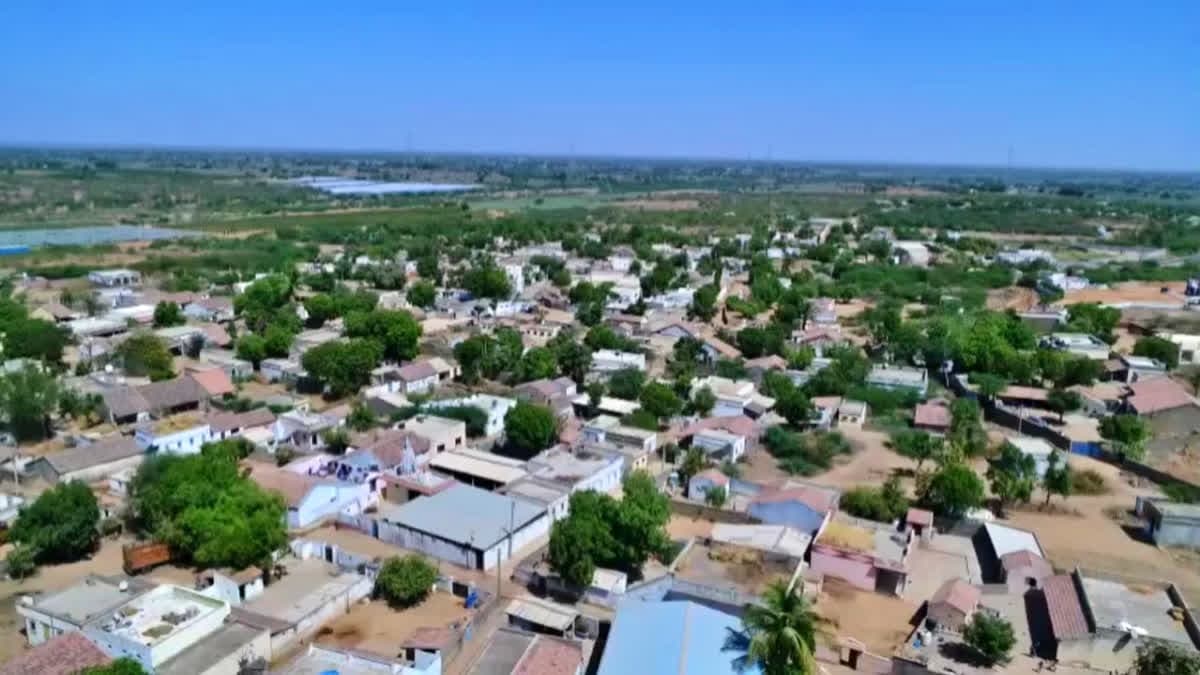
Smart village in Gujarat
Author : adminPublished : April 4, 2026
1. Introduction: When a Village Became Smarter Than Cities
In the arid plains of Sabarkantha district, Gujarat, lies a village that quietly redefined how rural India could look, function, and govern itself. Punsari, home to just over 5,500 residents, is today celebrated as India’s first “Smart Village”—a title it earned not through private investment, corporate CSR, or pilot urban projects, but through visionary panchayat leadership and complete utilization of government schemes.
At a time when many Indian cities struggled with water shortages, crime, school dropouts, and power cuts, Punsari achieved what seemed improbable for a village: free village-wide Wi-Fi, 24/7 electricity, RO drinking water in every household, 650 CCTV cameras, biometric attendance in schools, air-conditioned smart classrooms, digital grievance redressal, and surplus village finances. The transformation began in 2012, led by a then 22-year-old sarpanch, Himanshu Patel, making Punsari a symbol of youth-driven governance.
What makes Punsari extraordinary is not just the infrastructure, but the method. Every element of its smart ecosystem was funded through existing central and state government schemes, without private donations or NGOs. By 2026, the village reported a ₹7 crore surplus, zero crime records for several consecutive years, and zero school dropouts—metrics that rival India’s most developed urban wards.
This article examines how Punsari became smarter than many cities, why its model is credible and scalable, and how it challenges long-held assumptions about rural governance and technological capacity in India.
| population of Gujarat | literacy rate of Gujarat | sex ratio of Gujarat |
2. Location Deep Dive: Sabarkantha’s Strategic Advantage
Punsari is located in Himmatnagar taluka of Sabarkantha district, northern Gujarat. While geographically rural, its position offers a rare combination of connectivity, administrative access, and economic spillover, all of which played a critical role in its transformation.
Geographic and Administrative Profile
- State: Gujarat
- District: Sabarkantha
- Taluka: Himmatnagar
- Population: ~5,500
- Households: ~1,100
- Area: ~12 sq. km
- Nearest town: Himmatnagar (12 km)
- Nearest metro: Ahmedabad (≈130 km)
Situated near NH-48 (Ahmedabad–Mumbai corridor), Punsari enjoys reliable road connectivity, enabling access to banks, government offices, suppliers, and higher education institutions. Its proximity to Ahmedabad, Gujarat’s technological and administrative hub, also facilitated early exposure to digital systems and governance best practices.
Why Location Mattered
Punsari benefited from:
- Early inclusion in Gujarat Fibre Grid initiatives
- Reliable electricity infrastructure suitable for solar hybridization
- Banking and administrative services within short distance
- A compact settlement layout, reducing implementation costs
Unlike remote villages that struggle with first-mile infrastructure, Punsari had the baseline conditions needed to leapfrog directly into advanced digital governance, making it an ideal testbed for a smart village model.
3. Leadership Origin: Himanshu Patel and the Power of Youth Governance

The Punsari story is inseparable from its sarpanch, Himanshu Patel, who was elected in 2012 at the age of just 22. At a time when rural leadership was often associated with seniority and status quo politics, Patel brought a startup mindset to village governance.
Early Vision (2012–2014)
When Patel assumed office, Punsari faced familiar rural challenges:
- Frequent power cuts
- Poor tax collection
- School dropouts
- Limited transparency in panchayat operations
Instead of incremental fixes, Patel pursued systemic change. His core philosophy was simple but radical:
“If cities can be smart with public money, villages can be smarter with discipline.”
He began by studying government scheme guidelines, realizing that most villages underutilized funds due to lack of planning, not lack of availability.
Financial Discipline and Revenue Reform
One of Patel’s earliest reforms was digitizing revenue collection:
- Property taxes were mapped and digitized
- Water usage was metered and billed transparently
- Panchayat services were monetized nominally but consistently
Within five years, Punsari transitioned from a cash-strapped panchayat to a self-sustaining local government, eventually reporting ₹7 crore in cumulative surplus—a rare achievement even among municipalities.
Patel’s leadership demonstrated that age is irrelevant when governance is data-driven, transparent, and citizen-centric.
4. Digital Infrastructure Stack: The Backbone of a Smart Village
At the heart of Punsari’s transformation lies its integrated digital infrastructure, designed not as isolated projects but as a village-wide system.
Connectivity and Surveillance
Punsari deployed:
- Free public Wi-Fi across the village
- 650 CCTV cameras covering roads, schools, public spaces, and the panchayat office
- A central control room monitored by trained staff
- Public Address System with 50+ speakers for announcements, health alerts, and emergency warnings
This infrastructure created a digital nervous system, enabling real-time monitoring of safety, service delivery, and civic behavior.
Power and Water Integration
- Solar-hybrid electricity system ensures uninterrupted power
- RO water plants supply clean drinking water to every household
- 3,000 LED streetlights drastically reduced energy costs
- Automated pumps and sensors minimized water wastage
Unlike pilot “smart” projects that fail after installation, Punsari invested equally in maintenance, training, and redundancy, ensuring long-term functionality.
5. Smart Education: Ending Dropouts Through Technology

Education was the most socially transformative outcome of Punsari’s smart village initiative.
School Infrastructure Revolution
Before 2012, Punsari’s schools resembled typical rural institutions. By 2026, they featured:
- Air-conditioned classrooms
- Smart boards and digital content
- Computer labs with 50+ systems
- Biometric attendance for students and teachers
Dropout rates fell from 15% to zero, and attendance reached nearly 100%.
Digital Learning Ecosystem
Students gained access to:
- Online learning portals via village Wi-Fi
- Competitive exam preparation resources
- Virtual exposure to urban academic standards
Parents, once hesitant, became active supporters as they saw measurable academic improvement, making education a shared village priority rather than a household burden.
Punsari proved that technology can eliminate rural education disadvantages faster than brick-and-mortar expansion alone.
6. Smart Governance: Panchayat 2.0 in Action
Perhaps Punsari’s most replicable achievement is its digitized panchayat governance, which turned the village administration into a service platform rather than a gatekeeping institution.
Digital Public Services
Residents can now access:
- Birth and death certificates online within minutes
- Digital property tax payments via UPI
- Pensions and welfare benefits through DBT
- Grievance redressal via WhatsApp and mobile apps
Response times dropped from weeks to under 24 hours, eliminating middlemen and informal payments.
Financial Transparency and Trust
Digitization achieved what awareness campaigns often fail to do:
- Increased tax compliance
- Eliminated leakage
- Built citizen trust in local government
From collecting just ₹12 lakh annually before 2012, Punsari’s panchayat finances grew into multi-crore, surplus-driven governance, entirely within the legal framework of existing schemes.
Punsari demonstrates that smart governance is not about expensive technology—but about disciplined systems, political will, and citizen participation.
7. Smart Security: 650 CCTV Eyes and Zero-Crime Reality
One of the most discussed—and often misunderstood—aspects of Punsari’s transformation is its village-wide surveillance system. With over 650 CCTV cameras, Punsari operates one of the densest rural security networks in India, rivaling coverage levels seen in high-income urban wards.
How the System Works
Cameras are strategically installed at:
- All road junctions and village entry points
- Schools, anganwadis, and playgrounds
- Public buildings, temples, and marketplaces
- Panchayat offices and service counters
Footage is streamed to a central monitoring room located within the panchayat building, staffed during peak hours and supported by cloud storage.
Impact on Crime and Safety
Before 2012, Punsari faced petty theft, occasional disputes, and nighttime insecurity—typical of semi-rural settlements. Post-implementation:
- Zero FIRs were recorded for multiple consecutive years
- Women report feeling safe walking at night
- Disputes are resolved early using footage as evidence
- External crime spillover from nearby areas is deterred
Importantly, surveillance in Punsari is framed as collective safety, not coercion. Community consent and transparency ensured that technology enhanced trust rather than fear.
8. Smart Utilities: Water, Power, and Waste at City Standards
Punsari’s smart identity is grounded in basic services delivered flawlessly, proving that “smart” begins with utilities, not apps.
Drinking Water Revolution
Every household in Punsari receives:
- RO-treated drinking water
- Metered supply ensuring accountability
- 24/7 availability without tanker dependence
Water quality testing is conducted periodically, and payment compliance is near-universal due to transparent billing.
Energy Independence
Punsari operates on a solar-hybrid electricity model, combining grid supply with decentralized solar generation:
- No scheduled power cuts
- LED streetlights across all roads
- Energy savings redirected into education and health
This reliability made it possible to sustain Wi-Fi, CCTV systems, and digital governance without disruptions—something many cities still struggle with.
Waste and Sanitation
- Door-to-door waste collection
- Zero open defecation status
- Sewage and drainage systems maintained through digital monitoring
Punsari demonstrates that smart utilities are not about scale, but about management discipline.
9. Economic Model: How a Village Became Financially Independent
Unlike most rural development success stories, Punsari is not dependent on perpetual grants. It operates on a self-financing governance model.
Revenue Streams
The panchayat earns revenue through:
- Digitized property tax collection
- Metered water tariffs
- Leasing of Wi-Fi and infrastructure services
- User fees for enhanced services (kept minimal)
By 2026, Punsari recorded a ₹7 crore surplus, all generated legally through government-authorized mechanisms.
Cost Control Through Technology
Digitization reduced:
- Administrative staffing needs
- Energy expenses via solar power
- Paperwork and service delays
This combination of higher revenue and lower operating costs turned the panchayat into a financially resilient institution—an exception in rural India.
10. Healthcare Digitization: From PHC to Telemedicine Village
Healthcare in Punsari reflects the same philosophy as its governance—access, speed, and prevention.
Health Infrastructure Upgrades
- Primary Health Centre connected to urban hospitals via telemedicine
- GPS-enabled ambulance with rapid response
- Digital health records for every household
- 100% Ayushman Bharat enrollment
Preventive Healthcare
Through the public address system and digital alerts:
- Vaccination schedules are announced village-wide
- Seasonal disease warnings are broadcast
- Maternal health camps are organized efficiently
This integration reduced emergency cases and improved health outcomes without expanding physical infrastructure excessively.
11. National and Global Recognition: From Village to Policy Model
Punsari’s success attracted attention far beyond Gujarat.
Awards and Studies
- Recognized as India’s First Smart Village (2017)
- Studied by NIRDPR as a national model
- Featured in World Bank and international rural digitization studies
- Visited by delegations from the US, Germany, and Southeast Asia
Policy Influence
Punsari now serves as a template for:
- NITI Aayog’s Smart Village initiatives
- State-level rural digitization programs
- Panchayat leadership training modules
Its importance lies not just in achievement, but in proof that the model is replicable.
12. Citizen Engagement: Creating a Smart Village Culture
Technology alone does not create a smart village—citizens do.
Digital Participation
Residents actively engage through:
- Ward-wise WhatsApp groups
- Digital grievance platforms
- Monthly virtual panchayat reviews
- Youth IT committees
Social Contract
Punsari established informal but effective norms:
- Tax compliance ensures uninterrupted services
- School attendance linked to incentives
- Cleanliness tied to water priority
- Digital literacy treated as a civic duty
As a result, villagers became co-creators, not passive beneficiaries, of development.
13. Visiting Punsari: India’s Rural Tech Pilgrimage
Punsari has emerged as a learning destination, not a tourist spectacle.
What Visitors Experience
- Live Wi-Fi access anywhere in the village
- CCTV control room demonstrations
- Smart classroom interactions
- Panchayat digital workflow presentations
- Solar power infrastructure tours
Who Visits
- Policymakers and administrators
- Researchers and students
- International development agencies
- Panchayat representatives from across India
The village maintains strict protocols to protect privacy while sharing knowledge.
14. Conclusion: Blueprint for 600,000 Smart Villages
Punsari stands as conclusive evidence that rural India does not suffer from a lack of ideas or resources—it suffers from execution gaps.
By combining:
- Young, accountable leadership
- Full utilization of government schemes
- Digital-first governance
- Citizen trust and participation
Punsari achieved what many cities aspire to: zero crime, zero dropouts, financial surplus, and universal services.
The lesson is profound:
If one village can do this with no private funding, 600,000 villages can do it with political will.
Punsari is not just India’s first smart village—it is a working blueprint for Digital India at the grassroots.
Latest Post
 City of Bridges in India
10/2/2026
 City of Black Diamond in India
10/1/2026
 Muslim Cities in India
9/30/2026
 Gold City in India
9/29/2026
 Gambling City in India
9/28/2026
 Cotton City in India
9/27/2026
 City of Rallies in India
9/26/2026
 City of Kings in India
9/25/2026
 Greenest City in India
9/24/2026
 Vegetarian City in India
9/23/2026
 Floating City in India
9/22/2026
 Dry City in India
9/21/2026
 Pink City of India
9/20/2026
 Riverside Cities in India
9/19/2026
 City of Seven Hills in India
9/18/2026