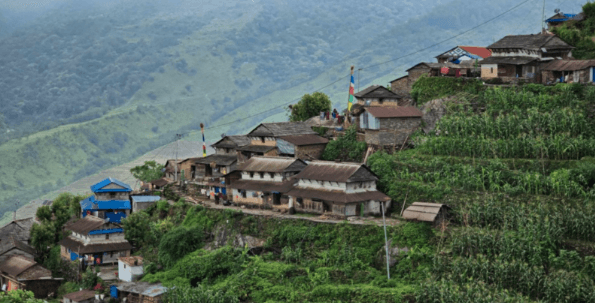
Smallest village in India
Author : adminPublished : February 17, 2026

In the remote, mist-covered hills of Arunachal Pradesh, far away from highways, railway lines, and crowded towns, lies a village so small that it often surprises even seasoned travellers and researchers. A narrow forest track opens onto a modest cluster of bamboo-and-tin houses perched on a ridge. There is no bustling marketplace, no skyline of concrete buildings—just a simple board that reads “Ha.” This is a village with only 58 families and a total population of 289 people, according to the 2011 Census of India.
Because of its extremely small population and clearly documented census data, Ha is frequently described in popular media and general-knowledge lists as “India’s smallest village.” Located in the Longding Koling (Pipsorang) circle of Kurung Kumey district, Ha represents one of the smallest fully enumerated village settlements in the country. Articles in Hindi and English newspapers, travel platforms, and GK portals often highlight Ha as an example of how tiny some Indian villages can be, especially in the remote North-East.
However, this label requires careful handling. The Census of India does not officially rank villages from smallest to largest at the national level, and India has more than 6.4 lakh villages, many of which have very small populations. What makes Ha stand out is not an official “title,” but the fact that it is one of the smallest census-recorded villages with complete, publicly accessible data.
This article explores where Ha is located, how small it truly is, who lives there, how daily life functions in a village of fewer than 300 people, and why it has become a popular reference point in discussions about India’s smallest villages—while remaining honest about the limits of the claim.
| population of Arunachal Pradesh | literacy rate of Arunachal Pradesh | sex ratio of Arunachal Pradesh |
2. Where Is Ha? A Remote Corner of Kurung Kumey
Administrative and Geographic Setting
Ha village is situated in Kurung Kumey district of Arunachal Pradesh, one of the least densely populated and most rugged districts in India. Administratively, Ha falls under the Longding Koling circle, also commonly referred to as Pipsorang circle in older and alternative records. The district itself borders Kra Daadi and Lower Subansiri districts and is characterised by difficult terrain and sparse settlements.
Kurung Kumey is known for its scattered villages, many of which have populations in the low hundreds. In this local context, Ha is notably small even among its neighbours. Nearby villages such as Nayeng (≈230 people), Haina (≈170 people), and Zara (≈232 people) are themselves tiny by national standards, but Ha’s 289 residents across just 58 households make it one of the smallest clearly enumerated villages in the district.
Terrain and Environment
The village lies in a hilly, forest-dominated landscape, marked by steep slopes, dense vegetation, and heavy monsoon rainfall. Elevation estimates place Ha at roughly 4,700–5,000 feet above sea level, typical of central Arunachal’s mid-Himalayan terrain. Landslides during the monsoon are common across Kurung Kumey, frequently cutting off villages for days or weeks at a time.
The surrounding environment is rich in biodiversity, with forests providing fuelwood, wild vegetables, and traditional medicinal plants. At the same time, this geography makes infrastructure development slow and expensive, contributing to the village’s long-standing isolation.
Connectivity
Ha has no railway access, and the nearest major roads and transport hubs are several hours away by road—often on narrow, winding mountain tracks. Public transport options are extremely limited, with buses or shared vehicles available only beyond a considerable distance. For most residents, connectivity depends on walking trails, basic roads, and seasonal accessibility.
3. Census Profile: How Small Is Ha, Really?
Population and Households
According to the 2011 Census of India, Ha village has:
- Total population: 289
- Households: 58
- Average household size: approximately 4 persons
This makes Ha one of the smallest villages with a clearly documented census profile in India. The population is small enough that nearly everyone in the village knows each other personally, often through blood or marriage ties.
Gender Composition
Ha’s gender statistics are particularly striking:
- Males: 138
- Females: 151
- Sex ratio: approximately 1,094 females per 1,000 males
This is significantly higher than both the national average and the Arunachal Pradesh state average, making Ha an interesting case for researchers studying gender balance in tribal and remote communities.
The child population (0–6 years) stands at 77, forming about 27% of the total population, which indicates a relatively young demographic structure.
Literacy and Work Profile
Literacy figures for Ha require careful interpretation. Census data records an overall literacy rate of around 31.6%, while some secondary databases report lower figures (around 23%) due to differences in how literacy is calculated (total population vs population aged 7 and above). This highlights the importance of understanding census methodology rather than quoting numbers in isolation.
In terms of employment:
- Total workers: 136
- Main workers: about 43%
- Marginal workers: about 57%
- Primary occupation: cultivation, with 58 main cultivators
These figures reflect a subsistence-oriented rural economy, heavily dependent on agriculture and forest resources.
4. Why Ha Is Called “India’s Smallest Village”
Media and General-Knowledge Usage
Ha’s reputation as “India’s smallest village” comes primarily from media articles, Hindi GK explainers, and travel lists that focus on villages with exceptionally low populations. These sources often highlight Ha because it combines three key factors:
- Extremely small population (289)
- Very small number of households (58)
- Clear census documentation with a unique village code
Unlike anecdotal settlements or hamlets, Ha is a fully enumerated census village, which makes it easier for writers, educators, and exam-setters to reference confidently.
Statistical Reality and Limitations
It is important to clarify that India has no officially published list ranking villages from smallest to largest by population. With more than 6.4 lakh villages, many settlements—especially in desert regions, border areas, and forest zones—have populations below 100, and in some cases even single-digit residents.
Therefore, Ha should be understood as one of the smallest census-recorded villages commonly cited in public discourse, not definitively the smallest village in India.
Responsible, E-E-A-T-Aligned Framing
The most accurate way to describe Ha is:
“Ha village in Kurung Kumey district, Arunachal Pradesh, is one of India’s smallest census-recorded villages, with just 289 people and 58 families, and is frequently referred to in popular media as India’s smallest village.”
This phrasing respects both the data and its limitations.
5. People and Culture: Life in a 58-House Village
Tribal Identity and Social Composition
Census records show that 100% of Ha’s population belongs to Scheduled Tribes (ST), with no Scheduled Caste (SC) population. The village falls within a broader cultural region dominated by Nyishi and related tribal communities, though specific clan or sub-tribe identification for Ha itself is not consistently documented in public records.
This homogeneity contributes to strong social cohesion. In a village of fewer than 300 people, kinship networks are dense, and social life is deeply interconnected.
Language and Belief Systems
Daily communication primarily takes place in local tribal dialects belonging to the Nyishi language group, while Hindi is used for administrative interaction and schooling. Some younger residents have basic exposure to English, mainly through education.
Religious life follows patterns common in central Arunachal Pradesh—indigenous animist beliefs, often blended with elements of Hinduism or Christianity depending on family traditions. Rituals tied to agriculture, seasons, and community well-being remain important.
Social Life in an Ultra-Small Community
In a village of 58 households, life is intensely communal. Farming, house construction, festivals, and crisis response are collective activities. Privacy exists, but individual lives are inseparable from the community as a whole.
Festivals, harvest periods, and traditional dances serve not only cultural functions but also reinforce identity in a place where outside influence is minimal. Ha’s culture, while modest in scale, represents a microcosm of tribal life in India’s eastern Himalayan frontier.
6. Daily Life in Ha: Agriculture, Forests, and Marginal Work
Life in Ha revolves around subsistence, cooperation, and adaptation to a difficult physical environment. With fewer than 300 residents and limited access to markets, the village economy is shaped less by cash income and more by self-reliance.
Livelihood Patterns
Census data shows that Ha has 136 working individuals, divided into main and marginal workers. Only about 43% are main workers, while the remaining 57% are marginal workers, meaning their employment is seasonal or irregular. This is typical of small hill villages in Arunachal Pradesh, where work opportunities fluctuate with weather, agricultural cycles, and forest access.
The dominant occupation is cultivation. Around 58 residents are recorded as cultivators, usually farming small plots of land either individually or jointly within family groups. Agriculture here is not commercial; it is primarily for household consumption, with surplus rarely reaching distant markets due to transport constraints.
Farming Practices
Agriculture in Ha follows patterns common to Kurung Kumey district:
- Small terraced fields carved into slopes
- Shifting cultivation (jhum) practiced in rotation with fallow periods
- Crops such as rice, millets, maize, and seasonal vegetables
Forest resources play a crucial role. Families collect fuelwood, wild vegetables, bamboo, and medicinal plants, which supplement farming and reduce dependence on external supplies.
Infrastructure and Services
Infrastructure in Ha remains minimal:
- Basic footpaths and limited road access
- No nearby railway or regular public transport
- Electricity access is intermittent and dependent on local arrangements
- Healthcare facilities are not located within the village; residents must travel to larger settlements for serious medical needs
Education is typically available only up to primary or middle school level in or near the village. Students seeking higher education must leave Ha, often staying with relatives or in hostels in district headquarters.
Vulnerability and Resilience
Ha faces persistent challenges—monsoon isolation, landslides, healthcare gaps, and lack of employment diversification. Yet, the village demonstrates resilience through strong community support systems, shared labour, and deep environmental knowledge passed down through generations.
7. Governance and Administration: Managing a Micro-Village
Despite its tiny size, Ha functions as a fully recognised administrative village within India’s Panchayati Raj system. Governance here highlights how national frameworks operate even at the smallest demographic scale.
Panchayat Structure
Ha is governed under the Gram Panchayat system of Arunachal Pradesh, falling within the Longding Koling (Pipsorang) circle. An elected sarpanch (or equivalent village head) represents the village in local governance, assisted by customary elders and community consensus.
Given the small population, governance is highly personal. Decisions regarding development works, dispute resolution, and welfare schemes are often discussed collectively, with informal consensus playing a major role alongside formal procedures.
Role in District Planning
Kurung Kumey is one of Arunachal Pradesh’s least developed districts, and villages like Ha are often prioritised in planning documents for:
- Rural roads
- Electrification
- Education and health outreach
- Tribal welfare schemes
At the same time, Ha’s small population means that implementation is slow but impactful. Even a single new facility—such as a water point or classroom—can significantly affect village life on a per-capita basis.
8. Ha in the Context of India’s Smallest Villages
Other Extremely Small Villages
Across India, many villages rival Ha in terms of small population—particularly in:
- Ladakh and border regions
- Rajasthan’s desert hamlets
- Remote forest villages of the North-East
Some have fewer than 100 residents, and a handful reportedly have only a single household. However, many of these settlements are:
- Poorly documented
- Classified as hamlets rather than villages
- Lacking clear census codes or consistent data
Why Ha Is Often Chosen as an Example
Ha stands out because it is:
- Clearly enumerated in Census 2011
- Recognised as a full village with an official code
- Backed by verifiable data on population, households, literacy, and work
This makes Ha particularly useful for:
- General-knowledge questions
- Academic examples
- Media storytelling about demographic extremes
Evidence-Based Conclusion on the Claim
From an E-E-A-T perspective, the most accurate conclusion is that Ha is one of India’s smallest census-recorded villages, frequently referred to as the smallest in popular discourse, though not officially ranked as such by the Census of India.
9. Travel and Field Research Potential
For Researchers and Fieldworkers
Ha offers a rare opportunity for micro-scale rural and tribal studies. With only 58 households, it allows researchers to:
- Observe governance at minimal scale
- Study subsistence livelihoods in isolation
- Examine demographic patterns like high sex ratio and low literacy
For anthropologists, development planners, and environmental researchers, Ha represents a living laboratory of how small communities sustain themselves at India’s geographic margins.
For Responsible Travellers
Ha is not a conventional tourist destination. There are no hotels, guided tours, or commercial attractions. Any visit should be:
- Purposeful
- Respectful
- Coordinated with local authorities
Photography, drones, and casual tourism can disrupt daily life in such a small settlement. Ethical travel here means observing quietly, engaging respectfully, and contributing positively, if at all.
10. Conclusion: What Ha Reveals About India’s Extremes
In a country often defined by scale—megacities, massive populations, and vast diversity—Ha represents the opposite extreme. With just 289 people and 58 families, it shows that India is also made up of tiny, tightly knit communities living at the edge of accessibility and visibility.
Ha’s significance lies not in an official title, but in what it teaches us:
- That governance frameworks extend even to villages of a few dozen homes
- That culture and community can thrive at very small scales
- That development challenges are magnified when numbers are small and geography is harsh
Ha may not be formally declared “the smallest village in India,” but it remains one of the clearest, census-verified examples of how small an Indian village can be—and why such places deserve attention in discussions about development, equity, and cultural preservation.In understanding Ha, we better understand India’s edges, where life continues quietly, resiliently, and largely unseen.
Latest Post
 City Of Peace In India
9/14/2026
 Highest Tax Paying City In India
9/13/2026
 City Of Light In India
9/12/2026
 City Of Hills In India
9/11/2026
 City of Gods in India
9/10/2026