Pink City of India
Author : adminPublished : September 20, 2026
When you think of pink-coloured streets, grand palaces, royal forts and colourful bazaars, one Indian city immediately comes to mind — Jaipur.
Located in Rajasthan, Jaipur is famously known as the Pink City of India. Founded in 1727 by Maharaja Sawai Jai Singh II, the city was carefully planned with broad streets, organised markets and distinctive architecture. Its historic walled city became famous for its terracotta-pink appearance after the buildings were painted pink in 1876 to welcome the Prince of Wales, with pink being associated with hospitality.

Today, Jaipur combines its royal past with a lively modern city. It is part of India’s famous Golden Triangle, together with Delhi and Agra, and attracts visitors with its forts, palaces, museums, handicrafts, jewellery, food and vibrant markets.
🎨 The Story Behind the Pink City
The pink colour is not simply a modern tourism symbol. It has a fascinating historical story.
In 1876, Maharaja Sawai Ram Singh II ordered the buildings of Jaipur’s old city to be painted in a terracotta-pink shade as a gesture of hospitality for the visit of the Prince of Wales. The colour subsequently became one of Jaipur’s defining visual features.
Walking through the old city today, visitors can still see rows of buildings displaying the characteristic colour, especially around the historic bazaars and major landmarks.

The result is a cityscape unlike almost anywhere else in India — terracotta facades, ornate windows, decorated balconies and busy streets filled with shops and traditional crafts.
👑 A City Designed for Royalty
Jaipur was established when Maharaja Sawai Jai Singh II decided to move his capital from Amber. The new city was planned with considerable attention to architecture, urban organisation and astronomy.
The city was designed with the guidance of Vidyadhar Bhattacharya and became one of the notable planned cities of its era. Its historic layout included broad avenues, organised blocks and fortified walls.
This planned character is one reason Jaipur feels different from many other historic Indian cities.
Rather than growing randomly around an old settlement, Jaipur was conceived as a purpose-built royal capital.
🏰 The Royal Side of Jaipur

Jaipur’s royal identity can be seen in its magnificent forts and palaces.
Amber Fort
Perched among the Aravalli hills, Amber Fort is one of the region’s most impressive historic monuments. Its courtyards, gateways, palaces and decorative interiors reflect the architectural traditions of Rajasthan. It is also part of the UNESCO-listed Hill Forts of Rajasthan.
City Palace
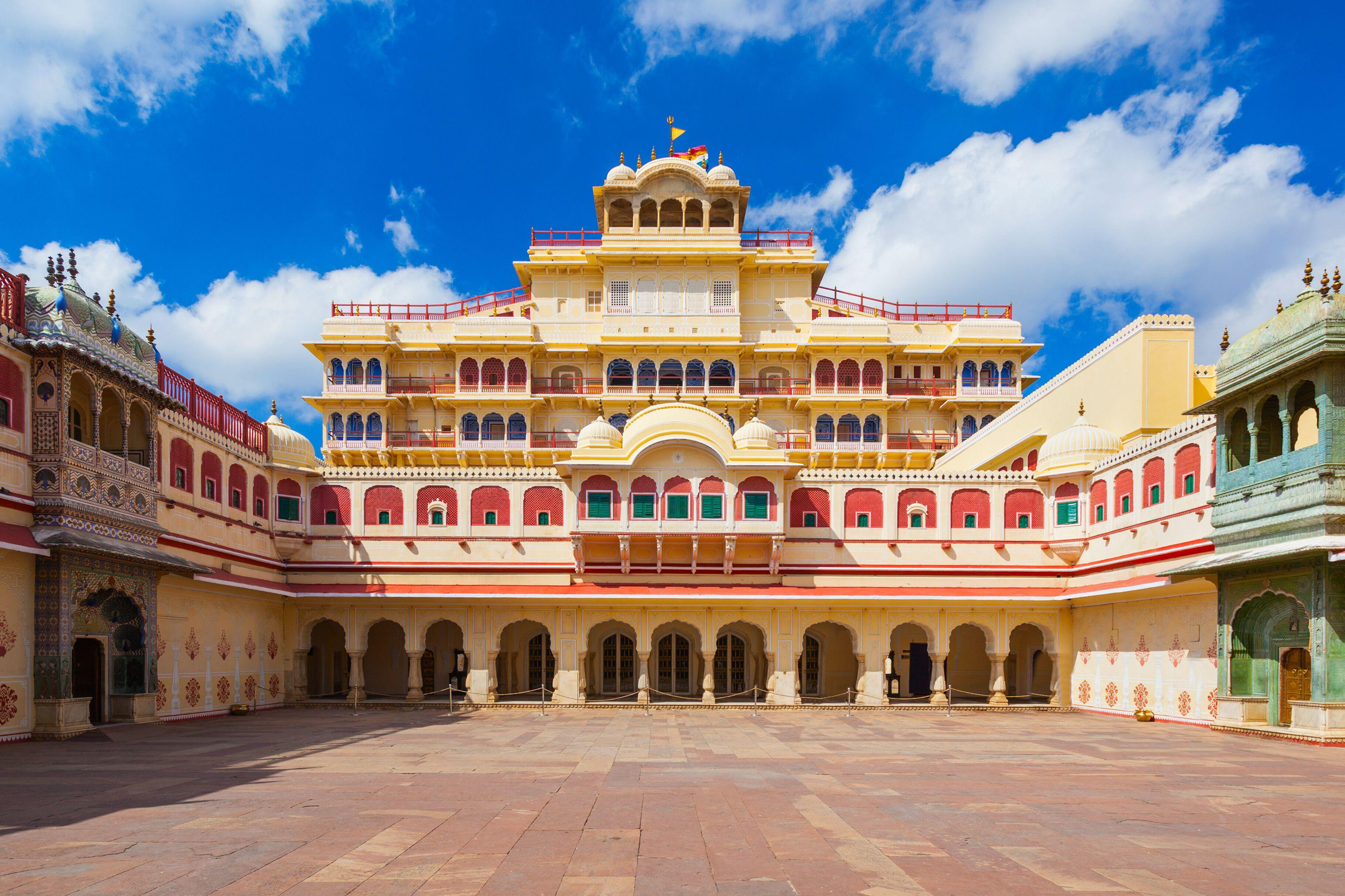
Located in the heart of the old city, the City Palace brings together courtyards, royal buildings, gateways and museums. It offers an insight into Jaipur’s former royal traditions.
Nahargarh Fort
Standing on the hills overlooking Jaipur, Nahargarh is particularly popular for its panoramic views. It provides a striking perspective of the city, especially around sunset.
Jaigarh Fort
Known for its massive fortifications and military history, Jaigarh adds another dimension to Jaipur’s royal landscape.
Hawa Mahal – The Face of Jaipur

No introduction to the Pink City would be complete without Hawa Mahal.
Also known as the Palace of Winds, this five-storey structure is one of India’s most recognisable monuments. It was built in 1799 during the reign of Sawai Pratap Singh. Its elaborate facade contains numerous small windows and openings that create its distinctive appearance.
The building was designed as an extension of the City Palace and allowed royal women to observe activity on the streets while maintaining privacy.
Today, its extraordinary facade has become almost synonymous with Jaipur.
🔭 Jaipur – Where Royalty Meets Astronomy

Jaipur is not only a city of palaces and forts. It also has an important connection with astronomy and science.
The Jantar Mantar contains a remarkable collection of astronomical instruments built in the 18th century. It is a UNESCO World Heritage Site and remains one of Jaipur’s most fascinating attractions.
The enormous stone and masonry instruments were designed for observing celestial movements and calculating astronomical measurements.
It is a wonderful reminder that Jaipur’s heritage is not limited to royal luxury — it also includes science, mathematics and architectural innovation.
🛍️ A Paradise for Traditional Shopping


For shoppers, Jaipur is a colourful treasure chest.
The city’s traditional markets are known for jewellery, textiles, handicrafts, block prints, pottery, leather goods and traditional Rajasthani products.
Popular Shopping Areas
Johari Bazaar – Famous for jewellery and traditional items.
Bapu Bazaar – Popular for textiles, handicrafts, souvenirs and colourful Rajasthani products.
Tripolia Bazaar – Known for traditional crafts, bangles and local shopping.
Chandpole Bazaar – A historic market area with handicrafts and traditional products.
Jaipur is particularly well known for its gemstones, jewellery and textile traditions.
🍛 Taste the Flavours of Rajasthan

A trip to Jaipur is also a journey through Rajasthan’s food culture.
Visitors can try traditional favourites such as:
Dal Baati Churma – One of Rajasthan’s best-known dishes.
Ghevar – A popular Rajasthani sweet, especially associated with festive occasions.
Pyaaz Kachori – A spicy and popular snack.
Mirchi Vada – A crispy chilli-based snack enjoyed across Rajasthan.
Laal Maas – A traditional spicy meat preparation.
Jaipur’s food scene also includes modern cafés, restaurants and royal-style dining experiences.
🌅 Jaipur Beyond the Monuments

One of Jaipur’s charms is that you do not have to spend the entire day inside monuments.
A relaxed evening around Jal Mahal, a sunset view from Nahargarh Fort, a walk through the old city’s colourful streets or an evening exploring the bazaars can provide a completely different experience.
The Aravalli hills surrounding the city add another layer to Jaipur’s landscape.
🧵 The Craftsmanship Behind Jaipur

Jaipur’s cultural identity is also visible in the work of its artisans.
The city and wider Rajasthan region are renowned for traditions including:
- Blue pottery
- Block printing
- Gemstone jewellery
- Traditional textiles
- Miniature painting
- Handicrafts
- Leather crafts
These traditions give Jaipur something that a museum alone cannot provide — living heritage.
📸 Experiences That Make Jaipur Special
Instead of simply ticking monuments off a sightseeing list, visitors can experience Jaipur through its everyday character.
🌸 Walk Through the Pink Old City
Explore the streets around the historic markets and admire the continuous pink architecture.
👑 Discover Royal Architecture
Spend time at the City Palace and explore the courtyards, gateways and museums.
🏰 Explore Amber Fort
Walk through the grand halls and courtyards while enjoying views of the surrounding hills.
🔭 Step Into the World of Astronomy
See the remarkable instruments at Jantar Mantar.
🛍️ Shop Like a Local
Browse jewellery, fabrics, handicrafts and colourful souvenirs in Jaipur’s traditional bazaars.
🌅 Watch the City at Sunset
Head towards Nahargarh for expansive views across Jaipur.
🌿 What Makes Jaipur Different?
Jaipur’s appeal comes from the way several identities exist together.
It is simultaneously:
A Royal City – because of its palaces and forts.
A Planned City – because of its carefully designed historic layout.
A Cultural City – because of its crafts, music, food and traditions.
A Shopping City – because of its jewellery, textiles and bazaars.
A Heritage City – because of its historic monuments and UNESCO-recognised sites.
A Modern City – with hotels, restaurants, businesses, educational institutions and contemporary attractions.
This mixture gives Jaipur a personality that goes well beyond its famous pink walls.
🗺️ Jaipur Travel Snapshot
| Category | Details |
| City | Jaipur |
| State | Rajasthan |
| Nickname | The Pink City |
| Founded | 1727 |
| Founder | Maharaja Sawai Jai Singh II |
| Famous Landmark | Hawa Mahal |
| Major Fort | Amber Fort |
| UNESCO Site | Jantar Mantar |
| Famous For | Palaces, forts, jewellery, crafts and food |
| Golden Triangle | Delhi – Agra – Jaipur |
| Best Experience | Heritage, culture, shopping and royal architecture |
📅 Best Time to Experience the Pink City
The cooler months are generally more comfortable for exploring Jaipur, particularly when visitors want to combine sightseeing with walking through the old city and markets.
October to March is commonly preferred for tourism because temperatures are generally more suitable for outdoor sightseeing.
Summer can be very hot, so travellers visiting during that period should plan outdoor activities around the cooler parts of the day.
💗 Why Jaipur Is Called the Pink City
The answer is beautifully simple: Jaipur’s historic identity became closely associated with its pink-coloured architecture after the old city was painted in 1876 as a gesture of hospitality for the Prince of Wales. The distinctive colour was retained and eventually became the city’s most recognisable visual symbol.
Even today, photographs of Jaipur’s pink facades, Hawa Mahal and colourful bazaars immediately evoke the character of Rajasthan.
🌺 Final Thoughts
Jaipur is the Pink City of India — a place where colour, history and royalty come together.
From the intricate windows of Hawa Mahal and the grandeur of Amber Fort to the astronomical instruments of Jantar Mantar and the lively bazaars of the old city, Jaipur offers a fascinating mix of experiences.
What makes the city particularly memorable is not one monument alone. It is the pink streets, royal architecture, Rajasthani food, traditional crafts, colourful markets and stories of its royal past that create Jaipur’s unmistakable identity.
For anyone exploring India’s heritage cities, Jaipur is a destination where the past remains visible in everyday city life — and that is precisely what makes the Pink City so special.
Latest Post
 Pink City of India
9/20/2026
 Riverside Cities in India
9/19/2026
 City of Seven Hills in India
9/18/2026
 Historical Cities In India
9/17/2026
 Most Suicidal City In India
9/16/2026