Muslim Cities in India
Author : adminPublished : September 30, 2026
India’s history is deeply connected with many Muslim dynasties, Sufi traditions, trading communities, scholars, artists, architects and cultural movements. Across the country, cities have developed distinctive Muslim cultural identities shaped by local traditions as well as centuries of interaction.
The phrase “Muslim cities” is not an official geographical classification. For a travel and heritage article, it is more useful to explore cities that are known for their significant Muslim communities, Islamic architecture, Sufi traditions, Muslim royal history or distinctive cultural heritage.
From the grand monuments of Delhi and Hyderabad to the Sufi atmosphere of Ajmer and the Malabar traditions of Kozhikode, these cities reveal different chapters of India’s diverse cultural story.
1. 🕌 Hyderabad — A Major Centre of Deccani Muslim Heritage
Hyderabad is one of India’s most prominent cities associated with Muslim history and culture.
Founded in the late 16th century by the Qutb Shahi dynasty, the city later became the capital of the Nizams of Hyderabad. These periods left a remarkable architectural and cultural legacy.

🏛️ Architectural Heritage
The Charminar is perhaps the most recognizable symbol of Hyderabad. Around it are historic bazaars, mosques and traditional streets.
Other important landmarks include:
- Mecca Masjid
- Chowmahalla Palace
- Qutb Shahi Tombs
- Purani Haveli
- Paigah Tombs
🍛 Cultural Identity
Hyderabad’s Muslim heritage can also be experienced through its food, language, clothing, poetry and festivals.
Biryani, Haleem, Qubani ka Meetha and Irani chai are among the city’s best-known culinary traditions.
Known For: Charminar • Nizams • Deccani culture • Biryani • Islamic architecture
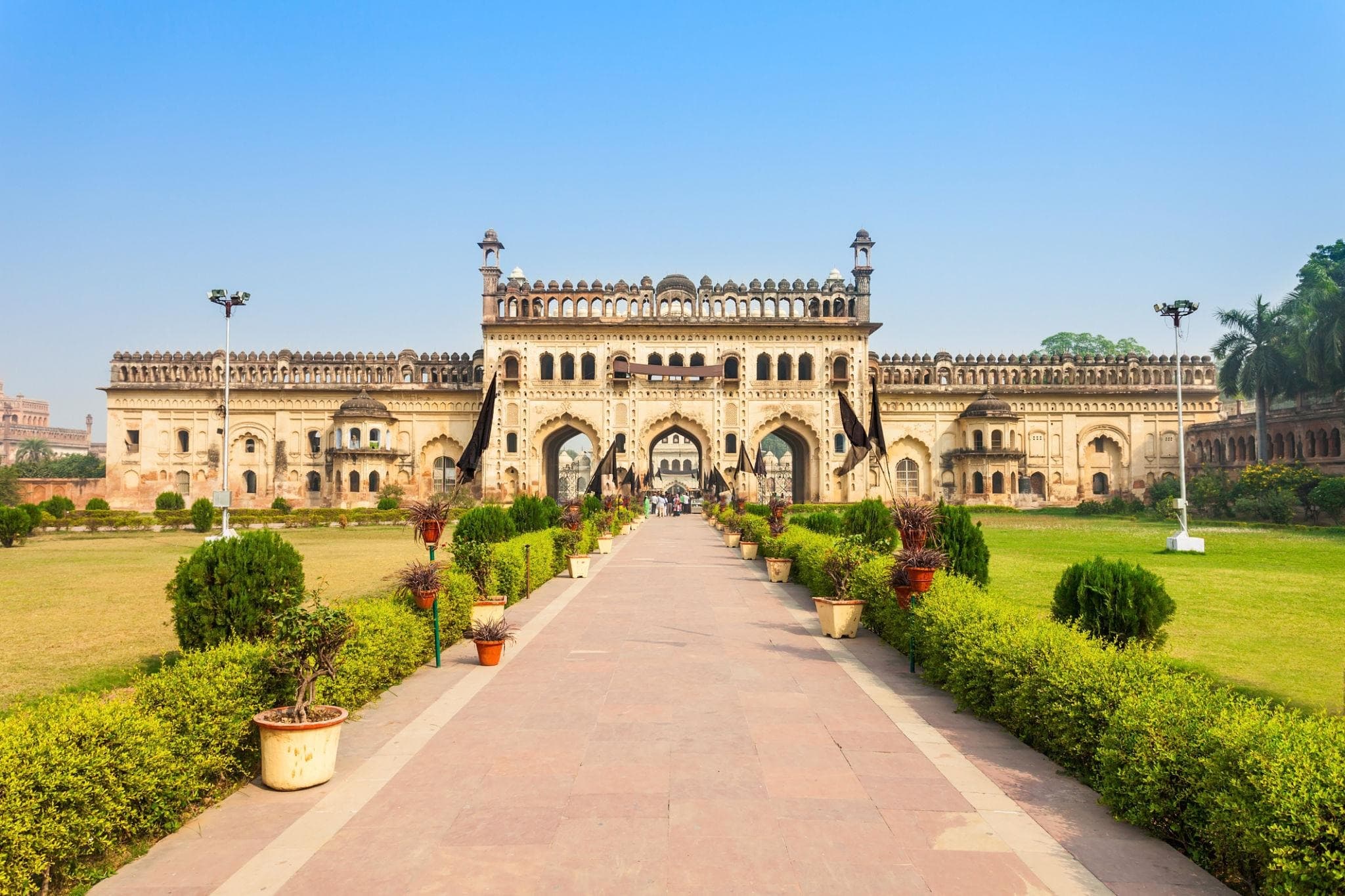
2. 🌙 Lucknow — The City of Nawabi Culture
Lucknow represents the distinctive Muslim and Indo-Islamic heritage of Awadh.
The city flourished under the Nawabs of Awadh, becoming an important centre of architecture, poetry, music, cuisine and refined court culture.

🏛️ Historic Landmarks
Bara Imambara is one of Lucknow’s most famous monuments. The complex is known for its enormous central hall and the fascinating Bhul Bhulaiya.
Chota Imambara and Rumi Darwaza add further character to the city’s historic landscape.
🎭 Culture of Lucknow
Lucknow’s cultural traditions extend beyond monuments.
The city is known for:
Urdu poetry • Ghazals • Kathak • Chikankari • Awadhi cuisine • Nawabi etiquette
Its Muslim heritage developed alongside Hindu traditions, creating the distinctive cultural character often associated with Ganga-Jamuni tehzeeb.
Known For: Nawabs • Imambaras • Urdu • Chikankari • Awadhi food
3. 🏛️ Delhi — Centuries of Islamic History
Delhi has been an important political and cultural centre for centuries and contains layers of Sultanate, Mughal and Sufi heritage.

🕌 Old Delhi
The area around Jama Masjid and Chandni Chowk preserves an important part of the city’s historic character.
🏰 Mughal Heritage
Humayun’s Tomb represents an important stage in Mughal architecture, while the Red Fort reflects the grandeur of Shah Jahan’s Delhi.
🕊️ Sufi Heritage
The Nizamuddin area is closely associated with Sufi traditions and the shrine of Hazrat Nizamuddin Auliya.
Delhi therefore brings together royal, religious, architectural and literary traditions in one historic landscape.
Known For: Mughal heritage • Sultanate history • Sufism • Jama Masjid • Old Delhi
4. 🏔️ Srinagar — Islamic Heritage in the Kashmir Valley
Srinagar offers a very different expression of Muslim culture.
Its Islamic heritage developed alongside Kashmiri language, crafts, architecture, gardens and the traditions of the Kashmir Valley.

🕌 Important Sites
Jamia Masjid Srinagar is an important historic mosque in the old city.
Hazratbal Shrine, located beside Dal Lake, is another major religious landmark.
The city also has a distinctive architectural tradition featuring wooden elements, traditional Kashmiri craftsmanship and historic neighbourhoods.
🧵 Cultural Heritage
Srinagar’s Muslim cultural identity is closely connected with:
Pashmina • Kashmiri carpets • Papier-mâché • Wood carving • Wazwan • Sufi traditions
Known For: Kashmiri culture • Mosques • Shrines • Handicrafts • Dal Lake
5. 🕌 Ajmer — A Major Centre of Sufi Heritage
Ajmer occupies a special place in India’s Muslim heritage because of its association with Khwaja Moinuddin Chishti, one of the most widely revered Sufi saints in South Asia.

🕊️ Ajmer Sharif
The Ajmer Sharif Dargah attracts pilgrims and visitors from different communities.
The annual Urs associated with the saint is a major religious gathering.
🌸 Sufi Culture
Ajmer represents a spiritual tradition in which devotion, poetry, music and hospitality have played important roles.
The city is therefore significant not only for Muslim religious history but also for India’s wider tradition of shared pilgrimage and cultural interaction.
Known For: Sufism • Ajmer Sharif • Urs • Spiritual heritage
6. 🕌 Bhopal — The City of the Begums
Bhopal has an unusual place in Indian history because it was ruled for several generations by the Begums of Bhopal.

The Begums played an important role in the development of the city’s civic institutions, architecture and education.
🕌 Taj-ul-Masajid
The enormous Taj-ul-Masajid is one of Bhopal’s most recognizable landmarks and an important example of Islamic architecture.
Bhopal’s heritage also includes palaces, mosques, lakes and old neighbourhoods.
Known For: Begums of Bhopal • Taj-ul-Masajid • Islamic architecture • Lakes
7. 🧠 Aligarh — A Centre of Muslim Education
Aligarh is especially important for its role in education and intellectual history.

The city’s identity is closely associated with Aligarh Muslim University and the educational movement founded by Sir Syed Ahmad Khan.
The university became an important centre of modern education, scholarship and intellectual life for generations of Indian Muslims.
Beyond education, Aligarh is also known for its traditional lock industry and local markets.
Known For: Education • AMU • Scholarship • Urdu culture • Intellectual heritage
8. 🏛️ Murshidabad — The Nawabi Heritage of Bengal
Murshidabad was an important centre of power in 18th-century Bengal and served as the capital of the Nawabs of Bengal.

The city contains monuments reflecting Bengal’s Islamic, Mughal-influenced and European-influenced architectural traditions.
🏛️ Major Attractions
- Hazarduari Palace
- Katra Mosque
- Nizamat Imambara
- Nashipur Rajbari
- Historic Nawabi buildings
Murshidabad provides an opportunity to explore a lesser-known but important chapter of India’s Muslim and Nawabi history.
Known For: Nawabs of Bengal • Historic mosques • Palaces • Murshidabad heritage
9. 🌊 Kozhikode — Muslim Heritage of the Malabar Coast
Kozhikode, historically known as Calicut, represents India’s maritime Muslim heritage.
For centuries, the Malabar Coast was connected to trade networks linking India with the Arabian Peninsula, Africa and other parts of the Indian Ocean.

These commercial and cultural interactions contributed to the development of the Mappila Muslim community and its distinctive traditions.
🌴 Malabar Culture
Kozhikode’s heritage can be experienced through:
Mappila songs • Malabar cuisine • Mosques • Maritime history • Traditional markets
Its Muslim heritage therefore has a strong connection with trade and the Indian Ocean.
Known For: Mappila culture • Malabar cuisine • Maritime trade • Islamic heritage
10. 🕌 Chhatrapati Sambhajinagar — Deccan Islamic Architecture
Formerly widely known as Aurangabad, Chhatrapati Sambhajinagar has important architectural links with the medieval Deccan and Mughal period.

🏛️ Bibi Ka Maqbara
The city’s most famous Islamic-era monument is Bibi Ka Maqbara, a grand mausoleum commissioned in the 17th century.
The city also serves as an important gateway to the Ajanta and Ellora cave complexes, making it particularly valuable for travellers interested in the wider history of the Deccan.
Known For: Bibi Ka Maqbara • Deccan history • Mughal heritage • Ajanta-Ellora gateway
🕌 Other Indian Cities With Important Muslim Heritage
The story doesn’t end with these ten cities.
Several other Indian cities also have significant Muslim communities or important Islamic historical traditions.
🌆 Ahmedabad
Known for its historic mosques, old city architecture and the Sidi Saiyyed Mosque.
🕌 Aurangabad Region
The wider Deccan contains numerous monuments reflecting centuries of Sultanate and Mughal influence.
🏰 Agra
Famous for the Taj Mahal, Agra Fort and other monuments associated with Mughal history.
🌙 Malerkotla
A historic city in Punjab with a distinctive Muslim cultural and historical identity.
🕌 Rampur
Known for the former Rampur State, its royal heritage, library and cultural traditions.
🏛️ Bidar
An important historic city of the Deccan associated with the Bahmani Sultanate.
🕌 Bijapur
Now Vijayapura, it is famous for monuments from the Adil Shahi period, including Gol Gumbaz.

🏗️ Architectural Legacy
One of the most visible contributions of Muslim dynasties and communities to Indian cities is architecture.
Across different regions, visitors can find:
🕌 Mosques
Places of worship that range from intimate neighbourhood structures to monumental complexes.
🏰 Forts
Military and royal architecture that reflects the political history of different periods.
🪦 Tombs and Mausoleums
Structures associated with rulers, nobles and Sufi saints.
🌿 Gardens
Mughal and Indo-Islamic garden traditions influenced landscaping and urban design.
🏛️ Palaces
Royal residences reflecting regional adaptations of Islamic and Indo-European architecture.
🍛 Muslim Culinary Heritage Across India
Food is one of the easiest ways to experience India’s diverse Muslim cultural traditions.
Different cities have developed their own culinary identities.
Hyderabad
Biryani • Haleem • Mirchi ka Salan • Qubani ka Meetha
Lucknow
Galouti Kebab • Awadhi Biryani • Nihari • Sheermal
Delhi
Nihari • Kebabs • Butter Chicken • Mughlai dishes
Kashmir
Wazwan • Rogan Josh • Yakhni • Kashmiri breads
Malabar
Malabar Biryani • Pathiri • Mappila snacks • Seafood
This variety shows that there is no single “Indian Muslim cuisine.” Regional ingredients and local traditions have shaped very different food cultures.
🎶 Music, Poetry and Literature
Muslim cultural traditions have also contributed enormously to India’s artistic landscape.
Urdu poetry, ghazals, qawwali, Sufi music and regional literary traditions have flourished in different parts of the country.
Cities such as Delhi and Lucknow became important centres of Urdu literary culture, while Sufi traditions spread through many regions.

🧵 Crafts and Traditional Arts
Muslim communities across India have also played important roles in traditional crafts.
Some examples include:
Chikankari of Lucknow
Zari and Zardozi embroidery
Kashmiri carpet weaving
Bidriware of Bidar
Hyderabadi metal and jewellery traditions
Carpet and textile crafts of northern India
These traditions combine artistic skill with local materials, regional designs and generations of craftsmanship.
🕊️ Sufi Cities and Spiritual Heritage
Sufism has played a particularly important role in India’s religious and cultural history.
Ajmer is perhaps the most internationally recognized example, but Sufi shrines and traditions can be found in many Indian cities.
These places have often attracted visitors from different religious and cultural backgrounds, creating spaces where spirituality, music, poetry and community traditions intersect.
🗺️ A Journey Through India’s Muslim Heritage
A cultural journey through these cities could look something like this:
Delhi → Agra → Lucknow → Bhopal → Hyderabad → Chhatrapati Sambhajinagar → Ajmer → Srinagar → Murshidabad → Kozhikode
Each destination tells a different story.
Delhi reveals imperial and Sufi history.
Lucknow showcases Nawabi culture.
Hyderabad presents Deccani traditions.
Ajmer represents Sufi spirituality.
Kozhikode tells the story of Muslim maritime communities.
Srinagar highlights Kashmiri Islamic traditions.
Murshidabad preserves Bengal’s Nawabi past.
📸 Things To Explore
- 🕌 Visit historic mosques.
- 🕊️ Discover famous Sufi shrines.
- 🏰 Explore Mughal and Nawabi monuments.
- 📖 Learn about Urdu literature.
- 🎶 Experience traditional qawwali and Sufi music.
- 🍛 Taste regional Muslim cuisines.
- 🧵 Explore traditional textile and embroidery markets.
- 🏛️ Visit historic forts and palaces.
- 🏘️ Walk through old-city neighbourhoods.
- 📸 Photograph Islamic architecture and heritage sites.
- 🌿 Explore historic gardens.
- 🛍️ Discover traditional markets and handicrafts.
- 🧭 Learn about the regional differences within India’s Muslim heritage.
- 🌏 Explore how Muslim traditions interacted with other Indian cultures.
✨ Final Thoughts
India’s Muslim heritage is not confined to one city, state or architectural style. It stretches from the Himalayan valleys to the Malabar Coast, from the old streets of Delhi to the royal courts of Hyderabad and Lucknow.
These cities reveal different stories of dynasties, traders, scholars, Sufi saints, artisans, poets, rulers and ordinary communities who helped shape India’s cultural landscape.
The result is a heritage that can be experienced through monuments, food, languages, music, crafts, literature, festivals and living traditions.
🕌 Muslim Heritage Cities of India — Where Architecture, Spirituality, Food, Literature and Centuries of History Come Together.
Latest Post
 Muslim Cities in India
9/30/2026
 Gold City in India
9/29/2026
 Gambling City in India
9/28/2026
 Cotton City in India
9/27/2026
 City of Rallies in India
9/26/2026