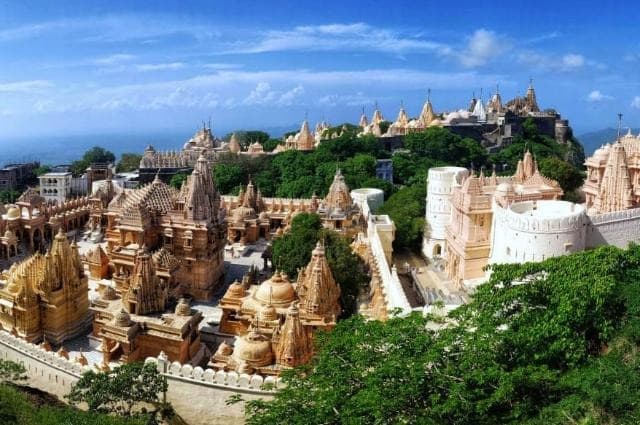
Jain Temple City in India
Author : adminPublished : October 19, 2026
India’s spiritual landscape is filled with sacred destinations, but few places capture the devotion, architectural brilliance and peaceful spirit of Jainism as beautifully as Palitana in Gujarat. Widely recognised as one of the holiest Jain pilgrimage destinations, Palitana is especially famous for the magnificent temple complex on Shatrunjaya Hill, where hundreds of shrines stand together across the hillside. The city attracts Jain devotees, history enthusiasts, architecture lovers and travellers seeking a deeper connection with India’s religious heritage.
Palitana is much more than a pilgrimage destination. Its intricately carved marble temples, towering spires, peaceful surroundings and centuries-old traditions reveal the dedication of generations of worshippers and artisans. The sacred hill is closely associated with Lord Adinath, the first Jain Tirthankara, making it particularly significant for Jain followers. From the spiritual experience of climbing the hill to admiring the extraordinary craftsmanship of its temples, every part of Palitana offers something meaningful. For anyone exploring India’s Jain heritage, Palitana is an unforgettable destination where faith, history and timeless architecture come together.
1. Palitana — The Sacred Heart of Jainism

Palitana, situated in Gujarat’s Bhavnagar district, is one of the most important pilgrimage destinations in Jainism. Its identity is closely connected with Shatrunjaya Hill, a sacred landscape featuring hundreds of Jain temples and shrines. Built, restored and expanded over many centuries, these temples reflect the devotion of Jain communities and the extraordinary skills of traditional artisans.
For pilgrims, visiting Palitana is an act of faith, discipline and spiritual reflection. The temple complex honours Jain Tirthankaras and represents the community’s commitment to preserving its religious heritage. The peaceful atmosphere, intricate architecture and hilltop setting also make Palitana fascinating for travellers interested in India’s history and culture.
- Sacred Pilgrimage: One of India’s most important Jain pilgrimage destinations.
- Shatrunjaya Hill: A revered hill crowned with magnificent temples.
- Temple Heritage: Hundreds of shrines arranged in beautiful temple clusters.
- Marble Craftsmanship: Detailed carvings, pillars, domes and ornamental designs.
- Spiritual Significance: A destination associated with devotion and liberation.
- Cultural Legacy: A living example of centuries of Jain religious patronage.
2. Shatrunjaya Hill — A Sacred Climb Towards Divinity

Shatrunjaya Hill is the spiritual centre of Palitana and one of the most revered pilgrimage sites in Jainism. The hill is crowned with hundreds of temples, arranged in groups of shrines known as tunks. Its name is commonly associated with the idea of conquering inner enemies, reflecting the Jain pursuit of self-discipline and spiritual liberation.
Pilgrims climb thousands of stone steps to reach the sacred complex. Many begin before sunrise to avoid the heat and experience the journey in a peaceful atmosphere. For devotees, the climb represents far more than a physical challenge; it is an expression of faith and commitment.
- Sacred Ascent: A traditional pilgrimage involving thousands of steps.
- Temple Clusters: Explore groups of beautifully constructed shrines.
- Spiritual Reflection: Experience an atmosphere of devotion and contemplation.
- Scenic Views: Admire the surrounding countryside from the hill.
- Religious Traditions: Discover the beliefs associated with the sacred landscape.
- Architectural Beauty: Observe temple spires, gateways and carved stonework..
3. Adinath Temple — The Principal Shrine of Palitana

The Adinath Temple, also known as the Adishwar Temple, is among the most important shrines on Shatrunjaya Hill. It is dedicated to Lord Rishabhanatha, also known as Lord Adinath, the first Tirthankara of Jainism. The shrine occupies a central place in the religious life of Palitana and is a major destination for pilgrims.
Its architectural beauty can be seen in its carved pillars, decorated ceilings, ornamental details and impressive temple structure. The shrine reflects the devotion of generations of Jain patrons who contributed to the construction and preservation of the sacred complex.
- Principal Deity: Dedicated to Lord Adinath.
- Religious Importance: One of the most significant shrines on the hill.
- Marble Artistry: Admire detailed stonework and decorative features.
- Sacred Atmosphere: A place for prayer and devotion.
- Historic Legacy: Reflects centuries of Jain temple patronage.
- Pilgrimage Experience: An essential destination for many visitors to Palitana.
4. Jain Temple Architecture — A Masterpiece in Marble

Palitana’s temples are celebrated for their elaborate craftsmanship and elegant architectural forms. The structures feature decorated pillars, beautifully carved ceilings, ornamental gateways, domes and towering spires. Their detailed designs demonstrate the skill of generations of artisans who transformed stone into extraordinary works of religious art.
The complex developed over many centuries, with different patrons contributing to its growth. Each shrine has distinctive details, yet together the temples create a harmonious sacred landscape. For architecture lovers, Palitana offers an opportunity to appreciate the relationship between religious devotion, traditional craftsmanship and India’s artistic heritage.
- Intricate Carvings: Floral, geometric and ornamental designs.
- Beautiful Pillars: Stone columns decorated with fine patterns.
- Sculpted Ceilings: Detailed designs above temple halls and shrines.
- Temple Domes: Distinctive roofs and decorative spires.
- Artistic Heritage: Evidence of generations of skilled craftsmanship.
- Religious Symbolism: Architecture designed to complement sacred spaces.
5. History of Palitana — Centuries of Faith and Devotion

Palitana’s temple heritage evolved over many centuries, with significant temple-building activity recorded from the medieval period onwards. The complex was not created by a single ruler or architect; it grew through contributions from Jain communities, merchants, religious leaders and patrons.
Like many historic religious sites, its temples experienced periods of damage, renovation and rebuilding. These successive efforts helped preserve the sacred hill as an important centre of Jain worship. Today, Palitana represents the continuity of a religious tradition supported by community devotion and a deep respect for sacred architecture.
- Medieval Heritage: Important temple-building activity developed over centuries.
- Community Patronage: Jain devotees and merchants supported temple construction.
- Restoration: Shrines were repaired and rebuilt over time.
- Religious Continuity: The hill remains a major pilgrimage destination.
- Architectural Evolution: The complex reflects different phases of craftsmanship.
- Living Heritage: The temples continue to serve an important religious purpose.
6. Jain Culture and Spiritual Traditions in Palitana

Palitana offers a meaningful glimpse into Jain philosophy and religious traditions. Jainism places great importance on ahimsa (non-violence), aparigraha (non-possessiveness) and self-discipline. These principles influence religious practices, personal conduct and the way devotees approach pilgrimage.
For many visitors, the journey up Shatrunjaya Hill provides an opportunity to reflect on the teachings of the Tirthankaras. The temples are not simply architectural attractions; they are active sacred spaces where prayer, devotion and religious observances continue.
- Ahimsa: Respect for life and the principle of non-violence.
- Pilgrimage: A spiritual journey undertaken with devotion.
- Prayer and Reflection: Opportunities for worship and contemplation.
- Temple Etiquette: Modest clothing and respectful behaviour.
- Community Traditions: Practices that preserve Jain heritage.
- Spiritual Learning: An introduction to Jain values and philosophy.
Other Jain Temple Cities and Destinations in India
India has numerous destinations renowned for their Jain temples, sacred hills, historic shrines and distinctive architecture. While Palitana is especially famous for its vast temple complex on Shatrunjaya Hill, other cities and pilgrimage centres offer equally fascinating insights into Jain religious heritage.
1. Ranakpur, Rajasthan — A Marvel of Marble Architecture

Ranakpur, located in Rajasthan’s Pali district, is famous for its magnificent Jain temple dedicated to Lord Adinath. The principal Chaumukha Temple is celebrated for its elaborate marble carvings, numerous pillars and impressive architectural design. Set amid the Aravalli hills, Ranakpur combines a peaceful natural setting with one of India’s most remarkable examples of Jain temple craftsmanship.
- Chaumukha Temple: The destination’s best-known Jain shrine.
- Marble Pillars: Elaborate carvings and ornamental designs.
- Lord Adinath: The principal temple is dedicated to the first Tirthankara.
- Aravalli Setting: Beautiful hills and green surroundings.
- Architectural Heritage: A major attraction for art and history enthusiasts.
- Spiritual Atmosphere: A peaceful setting for religious visitors.
2. Mount Abu, Rajasthan — Home of the Dilwara Jain Temples

Mount Abu is known for the celebrated Dilwara Jain Temples, a group of historic temples renowned for their exceptionally detailed marble craftsmanship. The temple complex includes the Vimal Vasahi and Luna Vasahi temples, among others, and showcases delicate carvings, ornamental ceilings and beautifully sculpted pillars.
These temples demonstrate how Jain religious architecture can combine simplicity of material with extraordinary artistic detail. Mount Abu is also a popular hill station, making it an appealing destination for visitors interested in both heritage and nature.
- Dilwara Temples: A celebrated group of Jain shrines.
- Marble Craftsmanship: Exceptionally fine sculptural details.
- Vimal Vasahi: A historic temple dedicated to Lord Adinath.
- Luna Vasahi: Another renowned temple in the complex.
- Cultural Heritage: A significant example of Jain architecture.
- Hill Station Setting: Scenic surroundings in the Aravalli range.
3. Shravanabelagola, Karnataka — The Sacred Jain Pilgrimage Centre

Shravanabelagola is one of South India’s most important Jain pilgrimage destinations. It is particularly famous for the monumental statue of Lord Bahubali, also known as Gomateshwara, located on Vindhyagiri Hill. The town also contains historic Jain temples, inscriptions and monuments associated with centuries of religious activity.
The combination of sacred hills, historic structures and the imposing Bahubali statue makes Shravanabelagola an important destination for understanding Jain history and spiritual traditions in Karnataka.
- Gomateshwara Statue: The iconic monumental image of Lord Bahubali.
- Vindhyagiri Hill: The principal pilgrimage hill.
- Chandragiri Hill: Home to historic Jain monuments and temples.
- Ancient Inscriptions: Evidence of Jain religious and cultural history.
- Pilgrimage Traditions: A centre of worship and religious gatherings.
- South Indian Heritage: An important destination in Karnataka’s Jain landscape.
4. Shikharji, Jharkhand — One of Jainism’s Holiest Pilgrimage Sites

Shikharji, located on Parasnath Hill in Jharkhand, is among the most sacred pilgrimage sites in Jainism. It is especially important because Jain tradition associates the hill with the liberation of numerous Tirthankaras. Pilgrims follow a traditional route across the hill, visiting sacred points and shrines along the way.
Unlike Palitana’s concentrated temple complex, Shikharji is known for its pilgrimage route through a hilly landscape. The destination is deeply meaningful for Jain devotees and offers a powerful connection between religious belief and the natural environment.
5. Ahmedabad, Gujarat — A City of Historic Jain Temples

Ahmedabad has a long association with Jain culture, patronage and religious architecture. The city is home to the celebrated Hutheesing Jain Temple, dedicated to Lord Dharmanath, the 15th Tirthankara. Its carved stonework, elegant domes and decorative details make it an important landmark in Ahmedabad’s architectural heritage.
The city’s historic neighbourhoods and religious institutions also reflect the influence of Jain communities on its commercial, cultural and social development. Ahmedabad is an excellent destination for travellers who want to explore Jain heritage alongside Gujarat’s broader history.
6. Hastinapur, Uttar Pradesh — A Sacred Centre of Jain Tradition

Hastinapur is an important Jain pilgrimage destination in Uttar Pradesh, with religious traditions connecting the area to several Tirthankaras. The town features Jain temples and the Jambudweep complex, known for its distinctive representation of Jain cosmology. Pilgrims visit the destination to worship, explore its religious landmarks and learn about the spiritual traditions associated with the region.
Hastinapur is also associated with India’s epic and historical traditions, giving it a broader cultural significance beyond Jain pilgrimage.
7. Kumbhoj, Maharashtra — A Revered Jain Pilgrimage Site

Kumbhoj, in Maharashtra’s Kolhapur region, is known for its Jain pilgrimage site associated with a towering statue of Lord Bahubali. The destination attracts devotees who come to offer prayers and explore the surrounding temple complex. Its religious significance makes it an important stop for pilgrims travelling through western Maharashtra.
Kumbhoj also illustrates the geographical spread of Jain heritage beyond the better-known temple destinations of Gujarat and Rajasthan.
8. Girnar, Gujarat — A Sacred Mountain of Jainism

Girnar, near Junagadh in Gujarat, is another major Jain pilgrimage destination. Its mountain temples are particularly associated with Lord Neminath, the 22nd Tirthankara. The pilgrimage involves climbing a long series of steps through the mountain landscape to reach sacred temples and shrines.
Girnar combines religious importance with striking scenery. Its temples, historic structures and demanding pilgrimage route make it a memorable destination for devotees and travellers interested in Gujarat’s spiritual heritage.
Why Jain Temple Cities Are Important to India

Jain temple cities and pilgrimage centres preserve some of India’s most distinctive religious and artistic traditions. Their temples reflect centuries of community patronage, skilled craftsmanship and devotion to the teachings of the Tirthankaras. Many destinations also contain historic inscriptions, sculptures and monuments that help explain the development of Jain culture across different regions.
Beyond their religious importance, these sites contribute to heritage tourism and encourage the preservation of traditional architecture. They also provide opportunities for visitors to learn about Jain philosophy, including non-violence, restraint and respect for living beings.
Final Thoughts
Palitana stands out as one of India’s most remarkable Jain pilgrimage destinations, with Shatrunjaya Hill offering an extraordinary collection of temples, intricate marble architecture and a deeply spiritual atmosphere. Yet the country’s Jain heritage extends far beyond Palitana. From the marble masterpieces of Ranakpur and Dilwara to the sacred mountains of Girnar and Shikharji, each destination offers a different perspective on Jain history, devotion and craftsmanship.
Together, these sacred places reveal the enduring contribution of Jain communities to India’s cultural and architectural heritage. Whether undertaken as a religious pilgrimage or a journey into history, exploring India’s Jain temple cities offers a meaningful opportunity to discover traditions built around faith, discipline, compassion and spiritual growth.
Latest Post
 𝗭𝗲𝗿𝗼 𝗪𝗮𝘀𝘁𝗲 𝗖𝗶𝘁𝗶𝗲𝘀 𝗶𝗻 𝗜𝗻𝗱𝗶𝗮
10/20/2026
 Jain Temple City in India
10/19/2026

 The City of Skyscrapers in India
10/17/2026
 The City of Ghats in India
10/16/2026
 Private City in India
10/15/2026
 City of Culture in India
10/14/2026
 Silicon Valley City of India
10/13/2026
 Sponge Cities in India
10/12/2026
 Silent City in India
10/11/2026
 Romantic Cities in India
10/10/2026
 Sports Cities in India
10/9/2026
 French City in India
10/8/2026
 City of Mountains in India
10/7/2026
 French City in India
10/6/2026