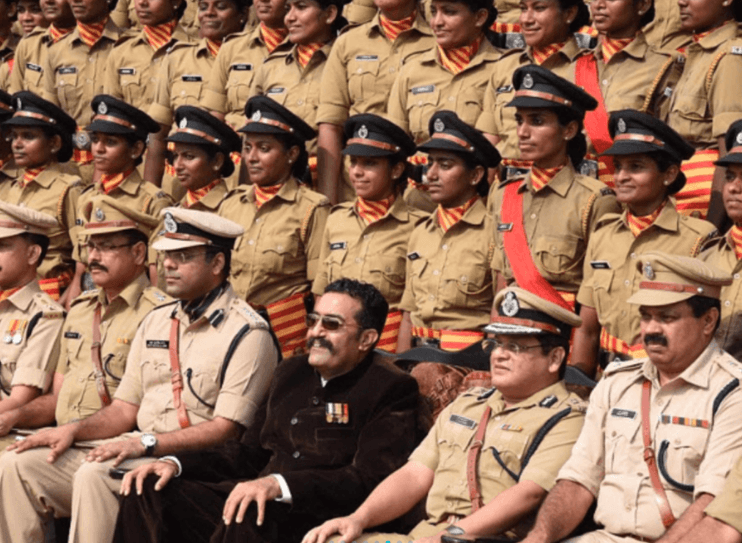
IAS Village in UP, India
Author : adminPublished : February 20, 2026
In the quiet lanes of Madhopatti, a small village in Jaunpur district of Uttar Pradesh, an extraordinary phenomenon has unfolded over more than a century. From just 75 households, the village has produced 47 IAS officers, along with numerous IPS, PCS, IRS, and senior government officials. No other village in India — and arguably the world — has generated such a dense concentration of civil servants from such a limited population base.
Madhopatti is often described as India’s “IAS Factory” or “Officers’ Village”, but these labels barely capture the scale of its achievement. Statistically, the village produces one IAS officer for every 1.6 households, a figure that is 33 times higher than Uttar Pradesh’s average and nearly 1,000 times higher than India’s rural norm. In a country where cracking the UPSC Civil Services Examination is considered one of the toughest intellectual challenges, Madhopatti has turned success into a repeatable social outcome.
What makes this story even more remarkable is what Madhopatti lacks. There are no elite schools, no coaching hubs, no libraries, no planned infrastructure, and until recently, even basic roads and electricity were inconsistent. Yet, for generations, children here have grown up assuming that becoming a civil servant is not an exception but an expectation.
This article explores how Madhopatti transformed ambition into tradition, families into institutions, and a village into one of India’s most powerful human-capital experiments.
| population of Uttar Pradesh | literacy rate of Uttar Pradesh | sex ratio of Uttar Pradesh |

2. Location Deep Dive: Eastern UP’s Silent Powerhouse
Madhopatti is located approximately 11 kilometers east of Jaunpur city, in eastern Uttar Pradesh — a region often associated with agrarian distress and limited opportunities. Ironically, this geographic context played a crucial role in shaping the village’s mindset.
Jaunpur has long been known as a historic center of learning, dating back to the Sharqi Sultanate, and later benefiting from proximity to Varanasi, Prayagraj, and Lucknow. Madhopatti sits quietly within this educational belt, close enough to access urban academic resources while remaining rooted in rural simplicity.
Despite a population of around 4,000 people, the village consists of only 75 extended households, many of them interlinked through kinship and marriage. This tight social fabric enabled rapid transmission of values, expectations, and discipline. Once civil services became the benchmark for success, the entire village moved in one direction — together.
Landholdings are small, averaging 2–5 acres per family, reinforcing the idea that agriculture alone could not ensure upward mobility. Instead of migrating permanently to cities, families adopted a hybrid model: rural residence combined with urban ambition, using nearby cities for education while keeping Madhopatti as the emotional and financial base.
In many ways, Madhopatti’s location offered the perfect balance of constraint and access — limited enough to push ambition, connected enough to make it achievable.
3. Historical Foundation: A Century of Administrative Legacy (1914 Onwards)
Madhopatti’s civil-service legacy did not emerge overnight. Its roots trace back to 1914, when Mohammad Mustafa Hussain became a Deputy Collector during British rule — the first major administrative officer from the village. At a time when education was rare in rural India, this achievement planted the seed of aspiration.
The true turning point came in 1917, when Shyamrati Singh, a visionary woman and educator, established a local school and taught children — boys and girls — free of cost for 22 years. Her philosophy was simple yet radical for its time: every child deserves education, regardless of gender or income. The primary school in Madhopatti still carries her legacy.
Post-Independence, the village’s ambition crystallized. In 1952, Dr. Indu Prakash Singh secured All-India Rank 2 in the UPSC examination, becoming Madhopatti’s first IAS officer in independent India. His success transformed individual aspiration into collective belief.
From the 1950s onward, Madhopatti entered a self-reinforcing cycle: one officer inspired many, success validated sacrifice, and education became the village’s primary identity. What began as an exception soon became a tradition — and then an expectation.
4. The Four IAS Brothers: A Family That Changed History
Perhaps the most astonishing chapter in Madhopatti’s story is the rise of four IAS brothers from the same family, a feat unmatched anywhere in India.
The Indu Prakash Singh family produced multiple IAS officers between 1952 and 1968, at a time when coaching institutes did not exist and preparation relied entirely on self-study, mentorship, and discipline.
- Dr. Indu Prakash Singh (1952 batch) – Secured AIR 2, later served as Ambassador to France
- Vinay Kumar Singh (1964 batch) – Became Chief Secretary of Bihar
- Chatrapal Singh (1965 batch) – Served as Chief Secretary of Tamil Nadu
- Ajay Kumar Singh (1966 batch) – Senior bureaucratic roles
- Shashikant Singh (1968 batch) – Senior administrative positions
This single family accounted for nearly 25% of Madhopatti’s total IAS output, creating a benchmark that reshaped village ambition. More importantly, these officers did not detach from their roots. They actively mentored relatives, sponsored education, and normalized civil-service success as achievable.
Globally, the achievement stands out: no other village or family has produced so many top-ranking administrators across multiple decades, especially in the pre-coaching era.
5. Current Officer Inventory: Madhopatti in 2026
As of 2026, Madhopatti’s officer count stands at an extraordinary level:
- IAS officers: 47
- IPS officers: 4
- PCS and state services: 12+
- IRS, judiciary, allied services: 8+
- Technical and international roles: 10+ (ISRO, BARC, World Bank, etc.)
Out of 75 households, 47 households have produced at least one officer, translating to a 62% penetration rate. Some families have produced two or three officers across generations, and several households are currently preparing new candidates.
On a per-capita basis, Madhopatti produces one officer for every 85 residents, an unmatched density anywhere in India. These officers serve across multiple states — Uttar Pradesh, Bihar, Tamil Nadu, Delhi — giving the village a pan-India administrative footprint far exceeding its geographic size.
6. Success Architecture: No Coaching, All Culture

Unlike other education-centric villages, Madhopatti has no formal success infrastructure. There are no private coaching centers, no libraries, and no structured institutional support. Instead, success is driven by what can only be described as cultural engineering.
Families pool resources to sponsor candidates. One successful officer typically supports three to five aspirants, covering fees, living expenses, and repeated attempts if necessary. Marriage alliances are formed almost exclusively among educated families, ensuring continuity of values.
Children grow up hearing civil-service stories at festivals, weddings, and daily meals. Officers occupy positions of social respect, not wealth display. Ambition is celebrated openly, while dropping out of education carries subtle social pressure.
In Madhopatti, culture replaces infrastructure. Discipline replaces facilities. Expectation replaces motivation seminars.
This unique success architecture proves a powerful lesson: when ambition is institutionalized at the family and community level, outcomes scale naturally — even without material advantage.
7. Female Officer Revolution: Breaking Rural Gender Barriers
One of the most extraordinary aspects of Madhopatti’s civil-services legacy is the early and sustained success of women officers, a rarity not just in rural Uttar Pradesh but in India as a whole—especially during the late 20th century.
At a time when women’s participation in higher education across rural India was limited, Madhopatti produced multiple women IAS and IPS officers in consecutive years, beginning in the early 1980s. Names such as Asha Singh (IAS), Usha Singh (IAS), Indu Singh (IAS), and Sarita Singh (IPS) became symbols of a quiet gender revolution unfolding inside this small village.
What sets Madhopatti apart is not merely the number of female officers, but the absence of resistance to women’s ambition. Education for girls was never seen as optional. Families treated daughters’ UPSC preparation with the same seriousness as sons’, often funding coaching, accommodation, and repeated attempts without hesitation. Marriage was not considered a barrier to preparation; in fact, many women cleared the examination after marriage, supported actively by in-laws who were themselves part of the officer ecosystem.
Statistically, women constitute roughly 12% of Madhopatti’s total officer output, a figure that rivals urban centers like Delhi when adjusted for population. In a village context, this level of female representation in elite services is almost unprecedented. More importantly, it created a self-reinforcing norm: girls grew up seeing women collectors, secretaries, and police officers as family members, not exceptions.
In Madhopatti, gender equality was not enforced through slogans or schemes—it emerged naturally from a shared belief that civil service excellence has no gender.
8. Economic Model: The Officer Economy

Madhopatti operates on what can best be described as an “officer economy”—a rural financial system powered overwhelmingly by salaries earned in government service rather than agriculture or local enterprise.
More than 85% of the village’s total income originates from IAS, IPS, PCS, IRS, and allied services. Officers posted in Lucknow, Delhi, Chennai, Patna, and other administrative centers send regular remittances back home. These funds support extended families, sponsor education for younger relatives, and finance UPSC preparation across generations.
Agriculture plays only a secondary role, largely as a cultural anchor rather than a livelihood engine. Small landholdings (typically 2–5 acres) provide subsistence crops, but farming is openly regarded as a fallback, not an aspiration. Shops, transport, and local services are often owned by officer families and exist primarily to serve village needs.
The most critical feature of this economy is reinvestment. Officer income is rarely used for conspicuous consumption. Instead, it is systematically redirected into:
- UPSC coaching fees
- Hostel accommodation in Lucknow/Prayagraj
- Books, test series, and mock interviews
- Financial support for repeated attempts
Estimates suggest Madhopatti invests ₹1–1.5 crore annually purely into education and examination preparation—an astonishing figure for a village of just 75 households. This reinvestment loop ensures continuity: every successful officer becomes a financier, mentor, and recruiter for the next batch.
In effect, Madhopatti has replaced traditional rural economic cycles with a human-capital compounding model, where knowledge and ambition generate sustained returns.
9. The Family Factory System: How Officers Are Made
Unlike coaching-driven success hubs, Madhopatti functions through a family-centric production system for civil servants. Preparation begins early, often before formal ambition is articulated.
Children grow up surrounded by:
- UPSC discussions at dinner tables
- Officers returning home during leave periods
- Rank lists, interview anecdotes, and posting stories
By adolescence, the career trajectory is implicit: graduation is mandatory, competitive exams are expected, and civil services are the gold standard.
Families adopt a portfolio approach to risk. While the IAS remains the ultimate target, candidates also attempt:
- PCS and state services
- Technical roles (ISRO, BARC)
- Judiciary and revenue services
This diversification ensures that almost every graduate secures a government position, even if UPSC takes multiple attempts. Failure is not stigmatized; quitting is.
Crucially, senior officers actively mentor juniors—reviewing answer copies, conducting mock interviews, arranging guidance from colleagues across cadres. This mentorship substitutes for institutional infrastructure and creates an in-house UPSC ecosystem unmatched anywhere else in rural India.
Madhopatti’s success is therefore not accidental—it is the result of inter-generational process optimization.
10. Village Infrastructure: Minimal Inputs, Maximum Output
Perhaps the most counter-intuitive element of Madhopatti’s story is what it doesn’t have.
There are:
- No elite schools
- No private coaching centers
- No libraries or reading halls
- No paved internal roads
- Intermittent electricity and basic water supply
Education begins in a modest government primary school rooted in the legacy of Shyamrati Singh. From there, students commute daily or weekly to nearby towns—Jaunpur, Prayagraj, or Lucknow—for higher studies and coaching.
Daily life is austere. Candidates wake before dawn, travel hours for classes, and return late at night. Preparation happens at home, often in shared rooms, guided by family discipline rather than institutional timetables.
This infrastructure paradox—elite outcomes from minimal facilities—highlights a central truth of Madhopatti: social expectations matter more than physical assets. The village proves that motivation, mentorship, and collective pressure can outperform bricks and mortar.
11. National Benchmarking: Madhopatti vs India
When placed in a national context, Madhopatti’s numbers are almost implausible.
India’s average UPSC success rate hovers around 0.02%. Rural India’s effective rate is even lower. Madhopatti, by contrast, achieves an estimated 1.17% success rate—nearly 5,800 times the national average.
Even compared to other celebrated villages:
- Dhorra Mafi (Aligarh): ~25% officer households
- Haryana “education villages”: ~2–3%
Madhopatti stands alone with 62% officer households, making it arguably the highest per-capita civil-services producer in the world.
This is not a statistical anomaly—it is a sustained pattern spanning more than 110 years, from the first Deputy Collector in 1914 to officers currently serving across India.
12. Cultural Mechanisms: UPSC as a Social Institution
In Madhopatti, UPSC is not merely an exam—it is a cultural institution.
Social life revolves around officer achievement:
- Officers sit at the head table during festivals
- Youngsters publicly announce exam results
- Marriages are negotiated based on educational pedigree
- Children are named after famous bureaucrats
Positive reinforcement is matched by social pressure. Dropping out of education carries stigma. Settling solely for agriculture is viewed as underachievement. Village meetings often include informal progress checks on aspirants.
This intense cultural immersion ensures that ambition is normalized, even expected. Success is celebrated; mediocrity is uncomfortable.
13. Visiting Madhopatti: A Cultural Pilgrimage
Madhopatti is not a tourist village in the conventional sense. There are no hotels, museums, or guided tours. Yet for civil-services aspirants, it has become a pilgrimage site.
Visitors often come to:
- Meet officer families
- Attend informal mentoring sessions
- Observe preparation routines
- Understand community discipline
Respect for local norms is essential. The village values seriousness, modesty, and academic focus. Photography is discouraged without permission, and visitors are expected to engage intellectually rather than casually.
For aspirants, a visit to Madhopatti is often transformative—a living reminder that success can emerge from the humblest settings.
14. Conclusion: India’s Greatest Rural Human-Capital Experiment
Madhopatti is not just a village—it is a system.
From 75 households, it has produced 47 IAS officers, multiple IPS, PCS, IRS, and technocrats, sustained across more than a century without elite infrastructure or external sponsorship. Its success rests on a rare convergence of historical legacy, family sponsorship, cultural discipline, and relentless ambition.
The Madhopatti equation is simple yet profound:
Education as religion + officers as role models + families as institutions = civil-service dominance
In an era obsessed with coaching factories and digital platforms, Madhopatti offers a radical lesson: human capital scales fastest when communities, not institutions, take ownership.
Among India’s many village extremes—digital, bio, educated, carbon-neutral—Madhopatti stands at the pinnacle of human excellence.
Latest Post
 City Of Peace In India
9/14/2026
 Highest Tax Paying City In India
9/13/2026
 City Of Light In India
9/12/2026
 City Of Hills In India
9/11/2026
 City of Gods in India
9/10/2026