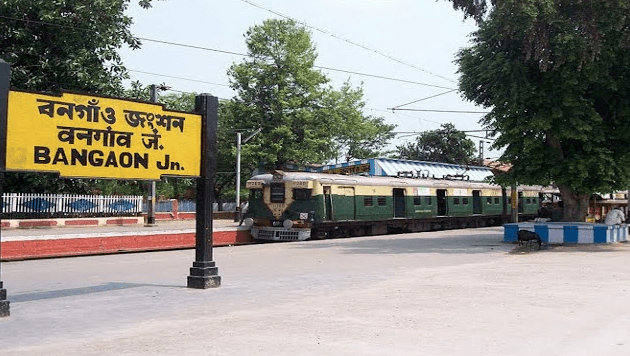
IAS village in Bihar
Author : adminPublished : February 21, 2026
Bangaon (also spelled Banagaon in some reports), a historic village in Saharsa district of Bihar, has acquired a striking reputation in recent years: it is widely described in media and local narratives as an “IAS village” — a place that has produced an unusually large number of civil-service officers, doctors, engineers and other professionals from a compact rural base. This label captures both pride and policy potential. Bangaon’s story matters because it helps explain how rural communities can convert limited local resources into human-capital advantage: sustained emphasis on schooling, community mentorship, local study infrastructure and social norms that prize public service.
At the same time, careful analysis shows the limits of the claim — “IAS village” is a useful shorthand for public recognition, but it needs context. In this article I profile Bangaon’s geography, social history, educational ecosystem, the pipeline that produces administrators, the role of women, local development effects, and realistic steps governments and practitioners can take to replicate the positive features while avoiding pitfalls. For key factual background on the village and its media reputation see the reporting cited below.
| population of Bihar | literacy rate of Bihar | sex ratio of Bihar |

Where is Bangaon and what is its local profile?
Bangaon is in Saharsa district, part of Bihar’s Kosi alluvial plains. The village is historically described as a seat of learning and Vedic scholarship and today hosts multiple schools and education initiatives; local sources note the village’s relatively dense network of formal schools and colleges given its rural setting. Bangaon is administratively part of Kahra block and is divided into sub-panchayats in local records.
The village’s economy remains largely agrarian — paddy and seasonal crops dominate — but recent decades have seen substantial out-migration and professionalisation, as family members work in government, private firms and overseas. These demographic and occupational shifts set the stage for the community’s reputation as a cradle of bureaucrats and professionals.
How the “IAS village” label emerged
The “IAS village” label was popularised by regional reportage and social media narratives that observed an unusually large number of residents (or people with village origins) in high administrative posts and other professional roles. Newspapers, web portals and local broadcasters picked up on the anecdotal counts — dozens of officers and a steady flow of aspirants — and framed Bangaon as a local “UPSC factory.”
That phrase is shorthand: it reflects visible patterns (alumni returning as mentors, many households with government employees) more than a centrally maintained register of civil-service pass-outs. Still, the cumulative media coverage (regional outlets, national features and local reportage) has consolidated the village’s reputation and catalysed local civic responses such as public libraries and study centres. Readers should understand the distinction between reputation based on multiple media and local claims and a formal state designation; the village’s renown is real even if the label is informal.
A short history: cultural roots and modern transitions
Historically, Bangaon has a tradition of scholarship: regional histories and local memory tie the area to Vedic and Sanskrit learning. Over the 20th century, public schooling spread across Bihar and communities like Bangaon were early adopters of vernacular and formal education.
The cumulative effect of expanded literacy, selective migration, remittances and aspirational norms helped families re-invest in education. Where earlier generations might have prioritised stability in local trades or farming, succeeding generations increasingly sought government service as a reliable pathway to social mobility. With each success — a teacher, a clerk, an officer — the village’s social narrative strengthened: “we can produce administrators.” Over time that narrative matured into organised support: evening study circles, local libraries, and alumni mentoring that made competitive exam preparation feasible within a rural setting.
The mechanics of success: how Bangaon converts aspiration into public service outcomes
Bangaon’s success is the result of several interlocking mechanisms. Below are the most important:
- Cultural emphasis on education and public service. Families in Bangaon hold education and government employment in high esteem; parents often prioritise children’s schooling and view civil-service careers as prestigious and stable.
- Local social capital and mentorship. Successful candidates who secured administrative jobs frequently returned to the village, organising study groups, mock interviews and sharing study materials. This “return-to-help” dynamic creates a low-cost coaching ecosystem.
- Village learning infrastructure. In recent years residents have opened community libraries and reading rooms offering free access to books, computers and testing resources — important practical supports for aspirants who cannot afford urban coaching centers. Local news reports have documented the opening of free libraries to support aspirants.
- Pooled finance and risk-sharing. Families and kin groups pool resources to fund a child’s preparation — covering travel, books, and sometimes short residential stays in district towns for intensive coaching phases. Informal community scholarships and donations from alumni reduce financial barriers.
- Peer accountability and routine. Aspirants study in communal time-tabled settings that replicate disciplined coaching regimes; weekly tests and peer review create momentum and prevent isolation.
- Information flows to urban resources. Local mentors and alumni act as bridges, providing aspirants access to urban study materials, satellite coaching recommendations and selective residential spells near coaching hubs when needed.
These mechanisms are not unique to Bangaon, but their persistent combination and local reinforcement are what drive outcomes there.
Education ecosystem: schools, libraries and free learning spaces
Bangaon’s educational infrastructure includes multiple primary and secondary schools and local colleges in the broader block — an unusually dense network for a rural locality in the Kosi belt. More recently, villagers established volunteer-run libraries and study centres that host daily classes, computer access and tutorials for competitive exams.
Local media coverage highlights that these libraries run regular testing days and typing classes, and that they receive book donations and some internet access to connect learners to online materials. These resources reduce dependence on costly urban coaching and keep aspirants embedded in family life rather than forcing prolonged urban stays — a material advantage for aspirants from economically modest households.
The mentorship chain: alumni return and structured help
One of Bangaon’s defining features is the alumni-driven mentorship chain. Former aspirants, now in service or other professions, regularly return for coaching sessions, mock interviews, and practical guidance on application and documentation processes. These returning mentors also help aspirants navigate bureaucratic steps — from domicile certificates to understanding transfer and posting norms — which can be daunting for first-generation aspirants. This feedback loop — success feeding back into preparation capacity — is the social infrastructure that urban coaching markets cannot replicate at low cost.
Gender and inclusion: are women part of the pipeline?
Women in Bangaon have increasingly taken part in higher education and competitive-exam culture. While early waves of civil-service aspirants were male-dominated, recent efforts by local groups and households have expanded female participation through targeted mentorship, study groups timed around household responsibilities, and scholarships. There remain barriers — household labour demands and social norms — but local initiatives, including women’s reading circles and digital literacy sessions, aim to reduce these constraints. Ensuring gender-equitable access remains an essential policy and social priority if the village’s model is to be inclusive.
Economic and social spillovers: how administrative success reshapes the village

When a village produces administrators, the local economy and governance often change measurably.
- Remittances and pensions from public-sector jobs provide stable incomes that fund better housing, education for siblings, and micro-investments in local shops and services.
- Institutional access improves: alumni in administrative posts sometimes help village bureaucratic navigation — e.g., smoother access to schemes or faster grievance redress — though ethical boundaries must be maintained to avoid nepotism.
- Public goods: returning officers and engaged alumni often sponsor or catalyse local public goods — libraries, school repairs, internet kiosks — generating wider social benefit.
- Aspirational norms: success stories create norms that valorise public service, influencing younger generations.
These positive spillovers contribute to long-term local uplift, but the effect depends on the scale and the equitable distribution of benefits.
Challenges, trade-offs and risks
Bangaon’s model is not without trade-offs:
- Equity concerns. Households with land, savings or diaspora connections find it easier to fund aspirants. Without targeted scholarships, the poorest families may be left out of the pipeline.
- Career monoculture risk. Overemphasis on civil-service careers can devalue vocational training and entrepreneurship — leaving the local economy less diversified.
- Psychological cost. Aspiring for highly competitive exams generates high stress and repeated failure can inflict social and emotional cost on households.
- Sustainability. The success cycle depends on a relatively small number of repeat successes; if that flow slows, momentum can falter. Some reports note that the pace of officer production has varied in recent years and that villages need to adapt.
- Ethical governance risk. When multiple village residents hold administrative posts, there is a persistent risk of parochial favouritism if ethical norms are weak; the village’s explicit focus on civic duty seeks to mitigate this risk.
Local innovations: libraries, testing days and community financing
Bangaon’s residents have implemented pragmatic innovations:
- Free libraries offering books, internet access and weekly mock tests. These are largely community funded and staffed by volunteers and alumni. Reported local media coverage described the opening of two libraries that serve many aspirants.
- Weekly testing routines: aspirants take timed tests to build exam stamina — a practice borrowed from formal coaching institutes.
- Community scholarships and pooled funds: villagers donate books and money; alumni fund travel for aspirants to short urban residencies.
- Typing and computer classes to build examination and documentation skills.
These grassroots measures are low-cost but high-impact because they leverage social capital more than external funding.
Replicability: can other villages copy Bangaon’s model?
Core elements are replicable and relatively low-cost:
- Build local libraries and test routines. A small library with donated books and a timetable for mock tests yields big returns.
- Activate alumni mentorship. Encourage returning professionals to run weekend clinics.
- Form community scholarship funds. Transparent local governance of funds helps poorer aspirants.
- Leverage digital resources. Create shared internet access points to use recorded lectures and free online test series.
- Combine aspiration with diversification. Pair civil-service coaching with vocational training so households have multiple pathways.
District administrations and NGOs can catalyse scale by funding initial libraries, providing digital infrastructure and formalising mentorship linkages to successful officers.
Policy recommendations: what state and district governments can do

Based on Bangaon’s experience, practical policy measures include:
- District satellite coaching hubs: short residential coaching stints subsidised for rural aspirants to gain concentrated instruction without long urban stays.
- Village library grants: small matching grants for community libraries with monitoring of usage metrics.
- Need-based scholarships: targeted funds for economically disadvantaged aspirants, administered transparently by panchayats.
- Mentor incentive schemes: nominal travel grants or recognition for officers who return to mentor local aspirants regularly.
- Digital connectivity: fund high-speed internet in public study centres to access online coaching resources.
- Mental health and welfare support: counselling services and periodic wellbeing workshops for aspirants.
These measures would create public-private-community partnerships that multiply local efforts at modest fiscal cost.
Measuring success responsibly: beyond pass rates
Evaluating the model requires diverse metrics:
- Participation rates by gender and socio-economic status (to track equity).
- Number of aspirants using local libraries and test centres.
- Rate of repeat attempts and success per aspirant cohort.
- Spillover indicators such as number of public goods created, local employment changes, and educational attainment across cohorts.
- Qualitative measures of wellbeing and community cohesion.
Measuring responsibly avoids reducing impact to only headline pass counts and helps sustain long-term support.
A short timeline (how Bangaon’s IAS story unfolded)
- Pre-1980s: Traditional schooling and agrarian livelihoods; some regionally notable scholars.
- 1980s–2000s: Expansion of public schooling; first waves of rural students obtaining government service jobs.
- 2000s–2015: Alumni return to help; early mentorship networks form.
- 2015–present: Community libraries and structured weekly testing; sustained media attention expands awareness and local initiatives. Local reporting in the mid-2020s documented the opening of two village libraries and continuing aspiration culture.
Stories from the village (composite, illustrative)
To humanise the model: imagine a young aspirant whose uncle — a district-level officer — provides a second-hand laptop and weekly mock-interview practice at the village library; neighbours contribute small monthly sums to a local scholarship fund; the aspirant studies with a peer group that meets daily after farm chores; when selected, the new officer returns to inaugurate a library reading corner. These composite stories capture the interplay of family sacrifice, alumni support, community pooling and personal grit that defines Bangaon’s pathway.
Ethics and media: responsible reporting on “IAS villages”
Journalists and content creators should avoid sensationalising Bangaon as a mythical “factory.” Responsible reporting emphasises structural features — libraries, mentorship, scholarships — and highlights the need for inclusion and ethical behaviour. Media attention can be positive when it catalyses support, but it must be coupled with respect for aspirants’ privacy and a focus on policy solutions rather than mere spectacle.
Conclusion — lessons from Bangaon for rural India
Bangaon’s reputation as an “IAS village” is both a community achievement and a policy lesson. The village demonstrates how social capital, returning alumni, local learning infrastructure, and modest pooled finance can enable rural aspirants to compete with urban peers. The model is replicable at scale if governments and NGOs invest in satellite coaching, community libraries, digital connectivity and need-based scholarships, while also safeguarding equity and diversifying local economies. Bangaon’s story is not a magic formula but a practical template: combine local will with modest public support and ethical mentoring, and rural talent can thrive.
Latest Post
 City Of Peace In India
9/14/2026
 Highest Tax Paying City In India
9/13/2026
 City Of Light In India
9/12/2026
 City Of Hills In India
9/11/2026
 City of Gods in India
9/10/2026