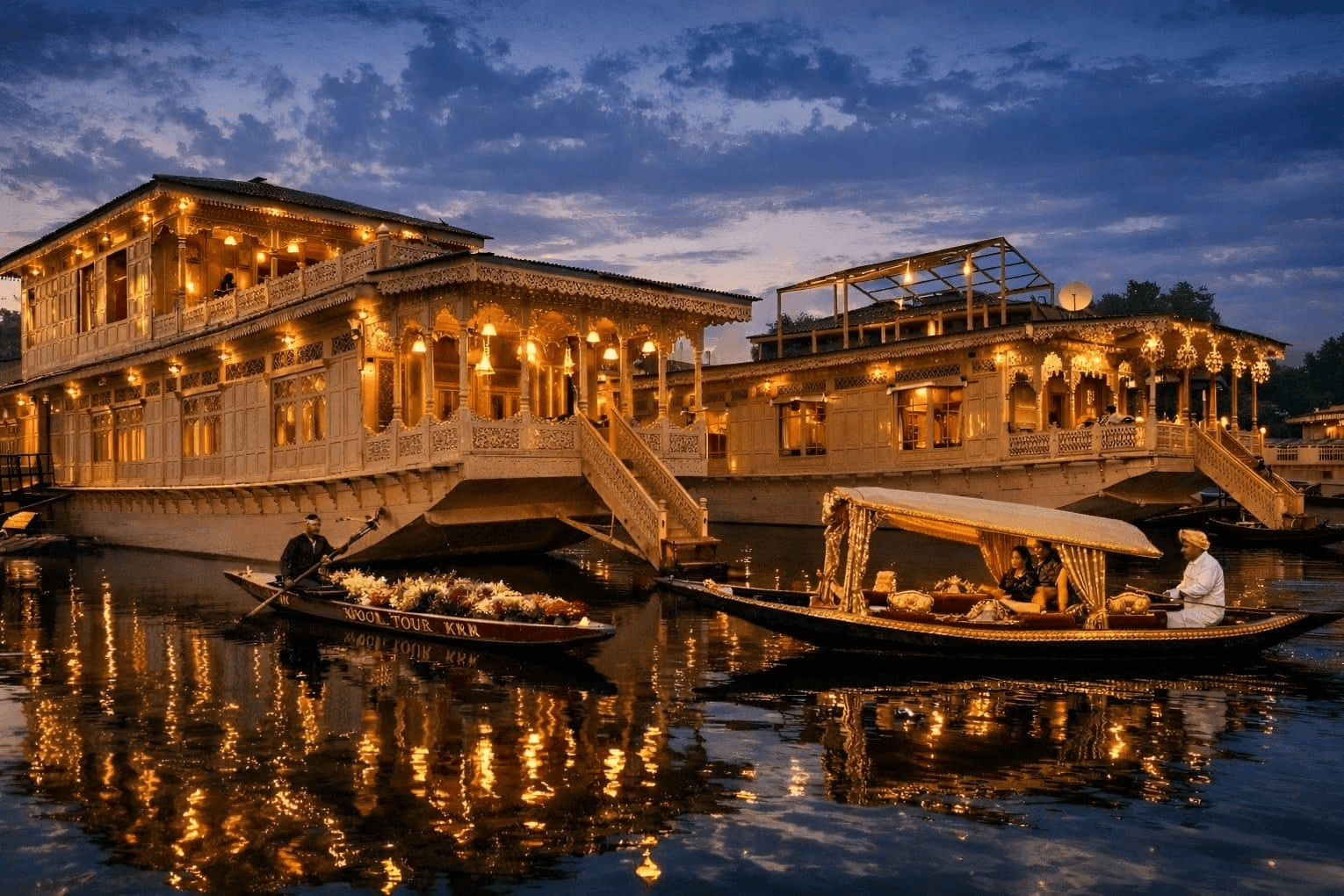
Floating City in India: Srinagar
Author : adminPublished : September 22, 2026
There are cities known for skyscrapers, cities famous for palaces, and cities remembered for their beaches. Then there is Srinagar, where the landscape seems to blend land and water into one beautiful experience. Located in the picturesque Kashmir Valley, Srinagar is popularly associated with the title “Floating City of India” because of the unique floating life of Dal Lake.
The famous Dal Lake is much more than a scenic attraction. Its calm waters are home to beautifully decorated houseboats, colorful shikaras, floating gardens and traditional markets. Early mornings bring a special charm, as shikaras glide across the water and vendors carry fresh vegetables and flowers to the floating market. The reflections of surrounding mountains and gardens add to the city’s magical atmosphere.
Here, the lake isn’t simply a beautiful backdrop. It is part of everyday life, reflecting Srinagar’s rich culture, traditional lifestyle and close relationship with nature. Together, its waterways, gardens and historic neighborhoods make Srinagar a truly distinctive destination.
🛶 Welcome to a City That Moves on Water

The first thing visitors notice about Srinagar’s floating world is the shikara.
These traditional wooden boats glide quietly across Dal Lake, carrying visitors, flowers, vegetables and local goods. A shikara ride offers a completely different perspective of the city.
Instead of traffic lights and crowded roads, you see:
boats passing by • houseboats • floating gardens • mountains • reflections on the water
It feels almost like entering another version of Srinagar.
🏠 Where Houses Float on the Lake

The houseboats of Dal Lake are perhaps the most recognisable symbol of Srinagar’s floating lifestyle.
Made largely from wood and traditionally decorated with intricate craftsmanship, these boats have been used as accommodation and are closely connected with Kashmir’s tourism culture.
Staying on a houseboat offers something hotels on land cannot quite reproduce—the gentle movement of water, views of the lake and mountains, and the feeling of waking up in the middle of Srinagar’s floating landscape.
🌱 The Secret World of Floating Gardens

One of the most unusual features of Dal Lake is its floating gardens.
Vegetables and other crops have traditionally been cultivated on floating plots formed from vegetation and soil. These gardens demonstrate how people have adapted agriculture to the lake environment.
Imagine waking up to a vegetable garden—not beside your home, but floating on water.
That is one of the details that makes Srinagar’s lake culture so different from ordinary urban life.
🥬 A Market Where the Road Is Water

One of the most fascinating experiences on Dal Lake is the floating vegetable market.
The activity begins in the early morning, when sellers and buyers gather in small boats. Fresh produce is transported across the lake, turning the water into a lively marketplace.
The scene is especially atmospheric around sunrise, when the lake is quiet and misty and dozens of small boats begin appearing across the water.
For travellers, it offers something more meaningful than a sightseeing stop—it provides a glimpse into the traditional economy and daily rhythm of the lake.
🌸 When the Lake Becomes a Garden

Dal Lake isn’t only about boats and houseboats.
During the warmer months, parts of the lake can become filled with aquatic vegetation and lotus blooms, adding another layer of colour to the landscape.
The combination of blue water, green vegetation, colourful boats and Himalayan surroundings creates the kind of scenery that has made Srinagar one of India’s most photographed destinations.
🏔️ A Floating City Surrounded by Mountains

What makes Srinagar’s water landscape even more dramatic is its setting.
The city lies in the Kashmir Valley, surrounded by mountains, while the Zabarwan Range provides a striking backdrop to Dal Lake.
On a clear morning, the mountains appear reflected in the water, creating the impression that the landscape continues beneath the lake.It is one of those views that makes you stop taking photographs for a moment and simply look.
🕌 Beyond the Lake: The Cultural Side of Srinagar


Srinagar’s identity goes far beyond Dal Lake.
The city is also known for its historic neighbourhoods, religious landmarks, gardens, traditional crafts and Kashmiri architecture.
Historic places and cultural attractions give visitors a chance to explore the city on foot, while its gardens offer peaceful spaces away from the busy parts of town.
The result is a destination where nature, history and everyday life exist remarkably close together.
🌿 Mughal Gardens Add Another Layer of Beauty

Srinagar’s famous Mughal gardens are another reason the city feels so different.
Nishat Bagh, Shalimar Bagh and Chashme Shahi showcase terraced gardens, fountains, water channels and mountain views.
Their design reflects the Mughal fascination with gardens, water and carefully planned landscapes.
Together with Dal Lake, they help create Srinagar’s distinctive character—a city where water is woven into both nature and architecture.
🧺 Shopping in Srinagar

The floating experience may bring visitors to Srinagar, but its craft traditions give them another reason to explore.
Look out for:
Pashmina — Fine Kashmiri wool products
Carpets — Traditional handcrafted designs
Paper Mache — Decorative Kashmiri artwork
Walnut Woodwork — Intricately carved wooden products
Kashmiri Embroidery — Detailed traditional needlework
Shopping in Srinagar can feel like taking home a small piece of Kashmir’s artistic heritage.
🍎 A City Surrounded by Kashmiri Flavours

Srinagar’s food culture deserves its own chapter.
Traditional Kashmiri cuisine includes rich dishes prepared with aromatic spices and distinctive cooking techniques. Wazwan, a traditional multi-course feast, is particularly associated with Kashmiri culinary culture.
Visitors can also enjoy Rogan Josh, Yakhni, Gushtaba and Kahwa, depending on the menu and local preparation.
After a morning on the lake, sitting down with a warm cup of Kashmiri kahwa is a pretty excellent way to slow down.
📸 Things You Should Experience in Srinagar

- Take a Shikara Ride — Explore Dal Lake from the water.
- Stay on a Houseboat — Experience Srinagar’s traditional floating accommodation.
- See the Floating Market — Visit early to experience the lake’s morning activity.
- Explore Floating Gardens — Discover agriculture adapted to the lake environment.
- Visit Mughal Gardens — Explore Nishat Bagh and Shalimar Bagh.
- Explore Local Markets — Discover Kashmiri handicrafts and textiles.
- Try Kashmiri Cuisine — Taste traditional dishes and Kashmiri kahwa.
- Watch Sunrise on Dal Lake — One of the most peaceful times to see the lake.
- Photograph the Mountains — Capture the Zabarwan Range reflected in the water.
- Explore Old Srinagar — Discover the city’s traditional architecture and culture.
🌊 Why Is Srinagar Called the Floating City?
The nickname comes from the unusual relationship between Srinagar’s urban life and Dal Lake.
The lake supports a combination of:
Houseboats
Shikaras
Floating gardens
Floating markets
Fishing and water-based activities
Tourism
Communities connected to the lake
Together, these features create an environment that feels like a city intertwined with water rather than simply a city beside a lake.
🌅 The Best Time to See the Floating Side of Srinagar

Different seasons give Srinagar a completely different appearance.
Spring brings fresh greenery and flowers.
Summer offers pleasant lake experiences and vibrant vegetation.
Autumn adds beautiful colours to the surrounding landscape.
Winter can transform the surrounding mountains and landscape with a distinctly colder, quieter atmosphere.
For the floating market and peaceful lake experience, early morning is particularly special.
💙 What Makes the Floating City Special?
Srinagar’s charm isn’t simply that boats exist on a lake.
It is the way water becomes part of everyday life.
You can wake up on a houseboat, travel by shikara, watch vegetables being traded from boats, see floating gardens and finish the day watching the mountains reflect across Dal Lake.
That combination is what gives Srinagar its unique identity.
✨ Final Thoughts
Srinagar is more than a city beside a beautiful lake—it is a place where the lake itself becomes part of the city’s story.
Its houseboats, shikaras, floating gardens, markets, mountains and centuries-old cultural traditions come together to create an experience unlike the typical Indian city.
And perhaps that is the simplest way to describe the Floating City of India:
In Srinagar, sometimes the best way to explore the city is to leave the road behind and let the water lead the way.
Latest Post
 Floating City in India: Srinagar
9/22/2026
 Dry City in India
9/21/2026
 Pink City of India
9/20/2026
 Riverside Cities in India
9/19/2026
 City of Seven Hills in India
9/18/2026