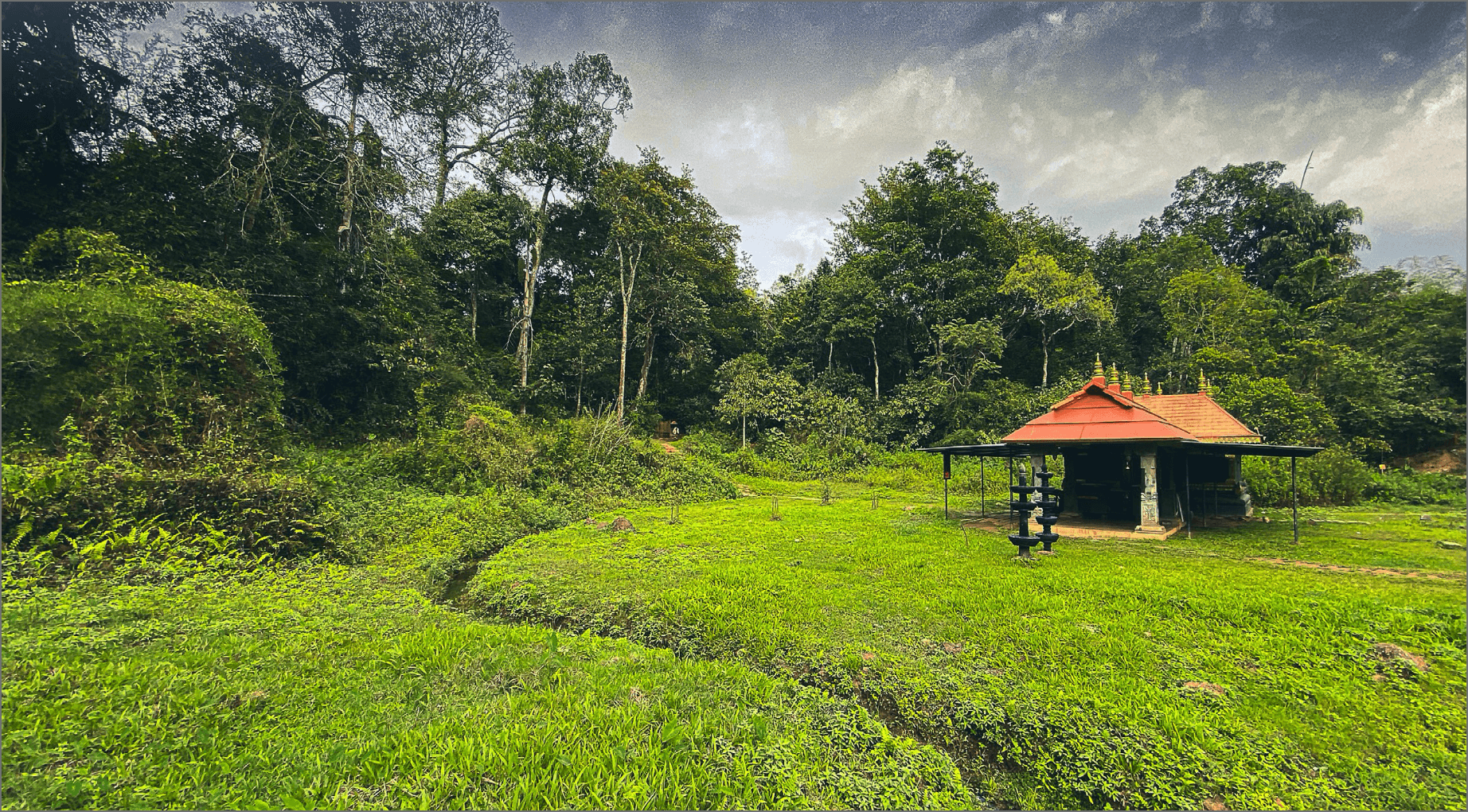
First carbon neutral village in Kerala
Author : adminPublished : March 24, 2026
In the global race to combat climate change, most solutions are discussed in terms of nations, mega-cities, or billion-dollar technologies. Yet in the forested hills of Wayanad district, Kerala, a rural local government quietly achieved what many countries still struggle to plan: net-zero carbon emissions. The place is Meenangadi Grama Panchayat, officially recognized as India’s first carbon-neutral village.
Launched on World Environment Day, June 5, 2016, Meenangadi’s Carbon Neutral Project was not a symbolic pledge or pilot experiment. It was a measurable, audited, and community-driven climate intervention that calculated emissions at the panchayat level and systematically neutralized them through organic agriculture, large-scale tree planting, waste management, renewable energy, and behavioral change. Within just one year, the panchayat achieved carbon neutrality—years ahead of India’s national climate commitments and decades ahead of global net-zero targets.
What makes Meenangadi exceptional is not just its environmental outcome, but how it was achieved. There was no heavy dependence on private corporations or external carbon markets. Instead, the project relied on panchayat leadership, scientific carbon accounting, household participation, and local economic incentives. Every tree planted, every chemical fertilizer eliminated, and every unit of energy saved was counted, verified, and owned by the community.
Backed by Kannur University’s carbon audits, Kerala Agricultural University studies, Local Self Government Department (LSGD) records, and later highlighted by the World Economic Forum, Meenangadi stands today as one of the most empirically validated rural climate models in India. It demonstrates that climate action does not need to wait for national legislation—it can begin, and succeed, at the village level.
In India’s evolving story of village extremes—digital innovation, biological sustainability, educational excellence—Meenangadi represents the environmental extreme: a village where carbon math defines governance, and climate responsibility becomes a shared civic identity.
| population of Kerala | literacy rate of Kerala | sex ratio of Kerala |
2. Location Deep Dive: Wayanad’s Carbon Sink
2.1 Geographic and Administrative Profile
Meenangadi is located in Sulthan Bathery taluk of Wayanad district, Kerala—one of India’s most ecologically sensitive regions and part of the Western Ghats biodiversity hotspot. Its geography played a crucial enabling role in its carbon-neutral ambition, though it did not guarantee success on its own.
| Attribute | Meenangadi Profile |
| State | Kerala |
| District | Wayanad |
| Taluk | Sulthan Bathery |
| Panchayat Wards | 14 |
| Population | ~34,000 |
| Area | ~38 sq km |
| Forest Cover | ~70% |
| Elevation | ~900 meters above sea level |
| Average Rainfall | ~3,200 mm annually |
The panchayat includes dense forests, plantation zones, agricultural plains, and residential clusters, creating a mosaic of land use that directly influenced its carbon balance. The cool, misty climate and high rainfall provide ideal conditions for rapid biomass growth, making tree-based carbon sequestration both viable and sustainable.
2.2 Ecological Advantage — and Responsibility
Wayanad already functions as a regional carbon sink due to its forest cover. However, Meenangadi’s leadership recognized an important distinction: natural advantage alone does not equal climate responsibility. Agricultural emissions, transport, household energy use, and waste generation were steadily increasing, threatening to erode this advantage.
This awareness led to a deliberate shift in perspective: Meenangadi would no longer rely passively on surrounding forests but would actively manage and expand its carbon sink, while simultaneously shrinking its emission sources. In doing so, it transformed geography into governance strategy.
2.3 Why Meenangadi Was Chosen
Meenangadi was selected for the Carbon Neutral Project because it met several critical conditions:
- Manageable administrative size (single panchayat)
- Diverse emission sources (agriculture, transport, waste)
- High literacy and civic participation
- Strong gram sabha culture
- Existing environmental consciousness
This combination made it an ideal laboratory for village-scale climate accounting, with the potential to generate replicable lessons for other local self-governments in India.
3. Carbon Neutral Project Genesis: From Global Climate Talks to Gram Sabha Action

The origins of Meenangadi’s carbon-neutral journey lie at the intersection of global climate discourse and local governance innovation.
3.1 Global Inspiration, Local Ownership
In 2015, Kerala’s then Finance Minister Dr. Thomas Isaac participated in discussions around the Paris Climate Agreement (COP21). These interactions triggered a crucial realization within Kerala’s policy circles: if climate goals are to be met, action must move below the state and national levels.
Environmental organization Thanal, working with local governments, proposed a radical idea—carbon neutrality at the panchayat level. Meenangadi Grama Panchayat volunteered to pilot this concept.
The project was formally launched on June 5, 2016 (World Environment Day), signaling both symbolic intent and operational urgency.
3.2 Scientific Baseline: Measuring Before Acting
Unlike many green initiatives, Meenangadi began with rigorous scientific measurement. A detailed carbon audit was conducted with support from:
- Kannur University (Zoology Department) – carbon stock and biodiversity mapping
- Kerala Agricultural University – agricultural emissions and soil carbon analysis
- Ward-wise household surveys – energy use, transport, waste
The baseline assessment revealed:
Annual Carbon Emissions (2016):
• Agriculture: ~1,200 tons CO₂e
• Household energy: ~800 tons CO₂e
• Transport: ~450 tons CO₂e
• Waste: ~300 tons CO₂e
Total emissions: ~2,750 tons CO₂e/year
This data transformed climate change from an abstract threat into a quantifiable governance challenge.
3.3 A Time-Bound Target
Meenangadi did not set a distant or symbolic target. The panchayat committed to:
- Achieving net-zero emissions by 2020
- Reviewing progress annually through carbon audits
Remarkably, due to aggressive implementation and community participation, carbon neutrality was achieved by 2017, three years ahead of schedule.
This early success positioned Meenangadi as India’s first verified carbon-neutral local self-government, and one of the earliest such examples globally.
4. Eight Core Carbon-Neutral Strategies: How Meenangadi Balanced the Equation
Meenangadi’s success did not rely on a single intervention. Instead, it deployed a multi-layered strategy combining carbon sequestration and emission reduction.
4.1 Large-Scale Carbon Sequestration
Tree-based sequestration formed the backbone of the project.
- Three lakh saplings were planted across households, roadsides, institutions, and farms.
- A unique “tree mortgage system” was introduced, where each household committed to nurturing a minimum number of trees, which were counted as part of the panchayat’s carbon assets.
- A 38-acre sacred forest (Punyavanam) was developed on temple land, functioning as a long-term carbon reservoir.
Together, these initiatives generated over 1,800 tons of annual CO₂ sequestration capacity.
4.2 Organic Agriculture Transition
Chemical fertilizers and pesticides were a major emission source. Meenangadi invested ₹47 lakh to transition farmers toward organic agriculture:
- Establishment of Attakolli Jaiva Park for organic vegetable production
- Replacement of chemical inputs with vermicompost, bio-fertilizers, and green manure
- Promotion of mixed cropping and soil carbon enrichment
This shift reduced emissions by approximately 400 tons CO₂e per year, while improving soil health and farm incomes.
4.3 Waste and Energy Reforms
- Household composting became mandatory, drastically cutting methane emissions.
- Biogas plants replaced LPG in many homes.
- An electric crematorium eliminated large-scale firewood consumption, saving an estimated 200 tons of CO₂ annually.
The strength of Meenangadi’s model lies in this integration: every sector—food, energy, waste, culture—was part of the carbon equation.
5. Economic Model: Making Carbon Neutrality Profitable
One of Meenangadi’s most important innovations was proving that climate action can improve household economics.
5.1 Incentives Over Enforcement
Rather than relying on penalties, the panchayat used financial incentives:
- Tree maintenance payments
- Organic farming bonuses
- Biogas installation subsidies
Households earned up to ₹50,000–₹60,000 annually through a combination of savings and incentives.
5.2 Organic Premiums and Market Access
Organic produce from Meenangadi—especially pineapples and vegetables—commanded 25–40% higher prices in regional markets. This created a powerful feedback loop:
Environmental action → Higher income → Stronger participation
Carbon neutrality became economically rational, not just morally desirable.
6. Technical Implementation: Panchayat as Climate Manager
6.1 Governance Architecture
Meenangadi functioned as a climate-managed local government:
| Institution | Role |
| Grama Panchayat | Planning, fund convergence |
| MNREGA | Plantation and maintenance |
| Social Forestry Dept | Nurseries and species selection |
| Devaswom Board | Sacred forest management |
| Universities | Carbon audits and monitoring |
6.2 Community Mobilization
- Over 100 gram sabha meetings explained carbon accounting in simple terms.
- Each ward tracked tree survival and waste reduction.
- Annual carbon audits ensured transparency and credibility.
This structure turned the panchayat into a local climate authority, capable of planning, executing, and verifying complex environmental outcomes.
7. Carbon Metrics: Verified Neutrality, Not a Symbolic Claim
One of the most critical reasons Meenangadi stands apart from many “green village” claims in India is that its carbon-neutral status is measured, audited, and periodically re-verified. This is not a slogan; it is an accounting exercise grounded in environmental science.
7.1 Emissions vs Sequestration: The Numbers
Following the 2016 baseline audit, annual reviews showed a consistent narrowing—and eventual reversal—of Meenangadi’s carbon balance.
| Year | Emissions (tons CO₂e) | Sequestration (tons CO₂e) | Net Balance |
| 2015 (baseline) | 2,750 | 1,200 | +1,550 |
| 2017 | 1,850 | 2,850 | –1,000 |
| 2020 | 1,600 | 3,200 | –1,600 |
| 2025 (est.) | 1,550 | 4,100 | –2,550 |
This transition—from emitter to sink—was achieved by simultaneously shrinking sources and expanding sinks, a method consistent with international climate accounting norms.
7.2 Independent Validation
Meenangadi’s carbon neutrality has been:
- Audited annually by Kannur University
- Reviewed by Kerala Agricultural University
- Recognized through National Panchayat Awards
- Featured by the World Economic Forum as a case study in community-led climate action
This level of third-party validation makes Meenangadi India’s most scientifically documented carbon-neutral panchayat to date.
8. Social Impact: Climate Action as Culture
Carbon neutrality in Meenangadi is not confined to government files or technical reports—it has reshaped daily behavior, social norms, and civic identity.
8.1 Everyday Behavioral Shifts
- Zero plastic markets: Cloth and jute bags are the default.
- Household composting: Organic waste is no longer “waste” but input.
- Bicycle-first culture: Especially among school children.
- Energy consciousness: Electricity use, cooking fuel, and transport are discussed in carbon terms.
Climate responsibility has become a shared moral language, not an imposed rule.
8.2 Women and Youth as Climate Leaders
Women’s self-help groups play a central role:
- Producing vermicompost and bio-inputs
- Managing organic value-addition units
- Running awareness programs at ward level
Youth engagement is institutionalized:
- Carbon footprint modules in school curricula
- Tree-monitoring assignments using mobile apps
- Annual “Green Volunteer” elections in schools
This generational embedding ensures the model’s long-term sustainability beyond electoral cycles.
9. Challenges Overcome: What Almost Failed—and Why It Didn’t
Meenangadi’s success was neither smooth nor inevitable. Several obstacles threatened to derail the project.
9.1 Major Resistance Points
| Challenge | Nature of Resistance | Resolution |
| Organic farming | Fear of yield loss | Six-month demo plots |
| Tree survival | Initial mortality (~40%) | MNREGA follow-ups |
| Electric crematorium | Cultural hesitation | Multi-month dialogues |
| Funding gaps | High upfront cost | State + World Bank convergence |
The key lesson: every technical challenge was first treated as a social issue.
9.2 Why Meenangadi Succeeded Where Others May Fail
- Panchayat ownership, not NGO dependence
- Scientific baselines, not emotional appeals
- Economic incentives, not moral pressure
- Compact geography, enabling close monitoring
These factors transformed climate action from an abstract ideal into a manageable governance task.
10. Global Recognition & National Context
Meenangadi’s achievement resonated far beyond Kerala.
10.1 International Visibility
- World Economic Forum highlighted its “tree mortgage” innovation.
- Quartz described it as a claim challenging global urban climate narratives.
- Climate researchers reference Meenangadi as a rare example of rural net-zero verification.
10.2 India’s Carbon-Neutral Landscape
| Location | Status | Verification |
| Meenangadi (Kerala) | Achieved (2017) | University audits |
| Dhundi (HP) | Carbon-negative claim | Partial |
| Lakshmipuram (AP) | Aspirational | In progress |
Meenangadi remains the earliest and most rigorously validated example.
11. Current Status (2026): From Carbon Neutral to Carbon Negative
By 2026, Meenangadi is no longer merely carbon neutral—it is carbon negative.
11.1 Nine-Year Performance Review
- Sequestration capacity increased by 60%
- Emission intensity reduced by ~40%
- Organic farming adopted by 85% households
- Flood resilience improved during 2024 monsoons
The panchayat now absorbs more carbon than it emits annually, a rare distinction even among global eco-villages.
11.2 Scaling Strategy
Kerala has launched the Carbon Neutral Local Self Government (LSG) program using Meenangadi as the reference model.
Planned rollout:
2026–30: 10 panchayats in Wayanad
2030–35: 100 panchayats across Kerala
National integration: NITI Aayog replication studies
12. Economic Sustainability: The Carbon Economy
Carbon neutrality did not burden Meenangadi’s finances—it strengthened them.
12.1 Revenue Streams (2026)
| Source | Annual Revenue (₹ crore) |
| Organic farming premium | 2.5 |
| Tree maintenance incentives | 1.0 |
| Eco-tourism | 0.8 |
| Carbon credits (potential) | 0.5 |
12.2 Cost–Benefit Reality
- Initial investment (2016–17): ₹1.75 crore
- Annual O&M cost: ₹25 lakh
- Economic ROI: ~12%
- Environmental ROI: Exponential
Meenangadi demonstrates that carbon neutrality can be fiscally self-sustaining.
13. Visiting Meenangadi: Climate Tourism with Ethics
13.1 How to Visit
Kannur Airport → Sulthan Bathery → Meenangadi (2 hrs)
Best season: October–March
Stay: Organic farm homestays (₹1,800–2,500/night)
13.2 Responsible Visitor Code
- Mandatory tree-planting offset (₹100)
- Zero plastic policy
- Buy local organic produce
- No intrusive photography
Visitors are encouraged to learn, not consume the village as spectacle.
14. Conclusion: A Blueprint for Net-Zero India
Meenangadi achieved in one year what nations aim for by 2050—not through futuristic technology, but through governance, science, and community trust.
Its legacy equation is simple yet revolutionary:
**Accurate carbon accounting
- Panchayat leadership
- Economic incentives
- Community participation
= Verified net-zero**
If replicated across India’s 600,000 villages, Meenangadi’s model could offset over a gigaton of CO₂ annually, reshaping India’s climate trajectory from the ground up.
In the story of India’s village extremes—digital, biological, educational—Meenangadi represents the environmental pinnacle: a place where the future of climate action is already living in the present.
Latest Post
 Dry City in India
9/21/2026
 Pink City of India
9/20/2026
 Riverside Cities in India
9/19/2026
 City of Seven Hills in India
9/18/2026
 Historical Cities In India
9/17/2026