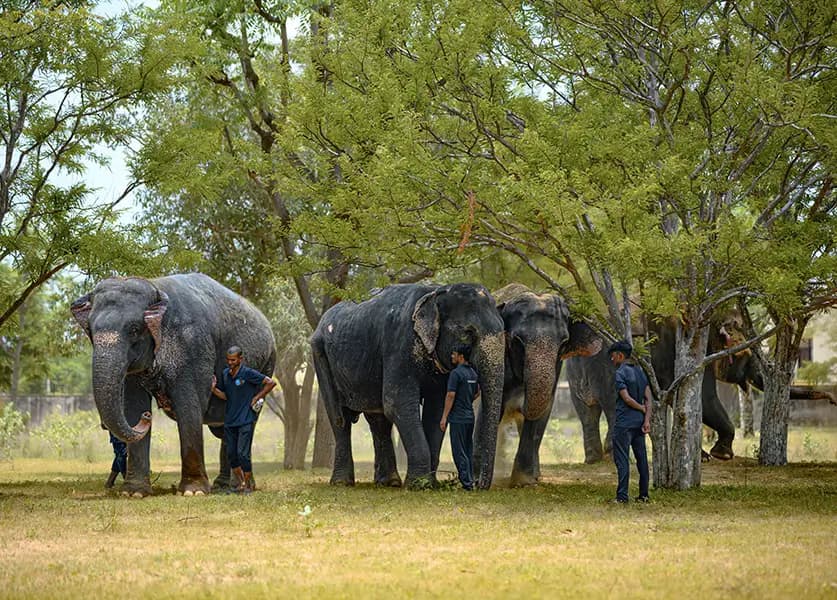
Elephant village in Jaipur
Author : adminPublished : April 1, 2026
Twelve kilometres from Jaipur’s bustling Pink City, at the foothills of the Aravalli range near Amber Fort, lies a settlement unlike any other in India. Hathi Gaon, literally meaning Elephant Village, is not merely a tourist attraction but a purpose-built elephant township—home to over 100 Asian elephants and nearly 150 mahout families living side by side across 30.5 hectares of government-planned land.
Established in 2010 by the Rajasthan Tourism Department, Hathi Gaon represents India’s first structured attempt to centralise elephant welfare, mahout livelihoods, and regulated tourism within a single ecosystem. Prior to its creation, elephants used for tourism in Jaipur were scattered across urban slums, private farms, and roadside enclosures—often lacking adequate shelter, water access, or veterinary care. Mahout families lived in precarious conditions, while animal welfare organisations raised repeated concerns about exploitation and overcrowding.
Hathi Gaon fundamentally altered this trajectory. Designed as a dedicated elephant habitat, it introduced individual thaans (open shelters), artificial bathing ponds, fodder storage systems, on-site veterinary facilities, and planned housing for mahouts, transforming a fragmented and controversial industry into a state-regulated conservation-tourism model.
Today, Hathi Gaon stands as India’s only village created specifically around elephants, balancing heritage tourism linked to Amber Fort, ethical interaction standards, and sustainable livelihoods for over 500 people. It is neither a zoo nor a sanctuary in the conventional sense, but a living community where human and elephant lives are institutionally interdependent.
As a case study, Hathi Gaon occupies a unique position in India’s rural and wildlife landscape—demonstrating how state-led planning can convert a welfare crisis into a globally observed model of ethical wildlife tourism.
| population of Rajasthan | literacy rate of Rajasthan | sex ratio of Rajasthan |
2. Location Deep Dive: Amber Fort Foothills
Hathi Gaon’s success is deeply tied to its strategic geographic placement. Situated near Kunda village in Amer tehsil, the elephant village lies just 2 kilometres from Amber Fort and approximately 12 kilometres from Jaipur city centre, placing it at the heart of Rajasthan’s most visited tourism corridor.
Geographic and Spatial Profile
| Parameter | Specification |
| State / District | Rajasthan / Jaipur |
| Area | 30.5 hectares (≈75 acres) |
| Distance from Amber Fort | 2 km |
| Distance from Jaipur | 12 km |
| Elevation | ~550 metres above sea level |
| Terrain | Aravalli foothills, semi-arid |
| Elephant Capacity | 100+ elephants |
This location offers several advantages. Proximity to Amber Fort—visited by over two million tourists annually—ensures a steady revenue stream without requiring aggressive marketing. At the same time, being outside the dense urban core allows elephants access to open space, cleaner air, and controlled movement.
Natural monsoon-fed water channels and gently sloping terrain enable the maintenance of artificial ponds used for elephant bathing and hydration. Connectivity via NH-21 and Jaipur International Airport (≈25 km) makes the village accessible to domestic and international visitors alike.
In effect, Hathi Gaon sits at the intersection of heritage tourism, ecological suitability, and infrastructure access, making it uniquely positioned to sustain a large captive elephant population responsibly.
3. Historical Foundation: The 2010 Government Initiative
Before Hathi Gaon’s establishment, Jaipur’s elephant tourism sector was facing a crisis. Between 2000 and 2010, elephants were privately owned, scattered across the city, and often kept in makeshift shelters near roadsides or tourist hotspots. Welfare monitoring was inconsistent, and mahout families lived in informal settlements without basic services.
Pre-2010 Challenges
- Elephants housed in congested urban spaces
- Lack of standardised veterinary care
- Poor sanitation and water access
- Rising criticism from animal welfare groups
- Unregulated tourist interactions
Recognising the reputational and ethical risks, the Government of Rajasthan, through the Rajasthan Tourism Development Corporation (RTDC) and the Forest Department, conceptualised Hathi Gaon as a centralised solution.
Implementation Timeline
| Year | Development Milestone |
| 2010 | Land acquired (30.5 hectares) |
| 2011 | Construction of elephant thaans |
| 2012 | Artificial pond + mahout housing |
| 2015 | Veterinary unit operational |
| 2017 | Regulated tourist fee system |
| 2023–26 | Ethical tourism protocols strengthened |
The vision was not to eliminate elephant tourism, but to institutionalise it under welfare-first principles, ensuring elephants, mahouts, and tourism operators all benefited within a regulated framework.
4. Elephant Infrastructure: A 100-Animal Township
Hathi Gaon functions as a fully planned animal township, with infrastructure designed around the physical, social, and behavioural needs of elephants.
Elephant Facilities Overview
| Facility | Description |
| Thaans (Shelters) | 100+ open, individual stalls |
| Artificial Pond | Large bathing and drinking area |
| Fodder Zones | Daily banana, sugarcane, fodder supply |
| Veterinary Unit | Resident vet + mobile care |
| Fodder Storage | Capacity of ~500 tonnes |
Each elephant is allocated its own thaan—open on all sides, allowing free movement and social interaction. Unlike enclosed stables, these shelters reduce stress and overheating, critical in Rajasthan’s climate.
Daily Care Routine
- 6:00 AM – Morning fodder (≈200 kg/elephant/day)
- 9:00 AM – Pond bathing (1–2 hours)
- 12:00 PM – Rest period in shelters
- 3:00 PM – Regulated tourist interactions
- 6:00 PM – Evening feeding + health checks
This structured routine ensures elephants receive predictable care, reducing anxiety and improving long-term health indicators. Importantly, work hours are capped, and rest periods are mandatory.
5. Mahout Community: 150 Families Sustained

Elephants at Hathi Gaon do not exist in isolation. The village is equally a human settlement, home to nearly 150 mahout families—around 500 people whose livelihoods and identities are tied to elephant care.
Human Infrastructure
| Facility | Coverage |
| Pucca Housing | 150 family units |
| Community Hall | Training & meetings |
| Primary School | Mahout children |
| Anganwadi | Early childhood care |
| Sanitation | Sewage treatment system |
For the first time, mahout families received formal housing, sanitation, electricity, and education access—a transformative shift from earlier informal living conditions.
Economic Model
Average household income:
- Tourist entry revenue sharing
- Activity-based earnings (feeding, bathing)
- Regulated rides
- → Approx. ₹40,000–45,000/month per family
This income stability has led to improved education outcomes, health access, and intergenerational skill transfer, reducing the need for children to enter labour early.
6. Ethical Tourism Activities: Regulated Interaction
Hathi Gaon operates on the principle that tourism must adapt to animal welfare—not the other way around. All visitor activities are regulated, time-bound, and monitored.
Visitor Activities & Fees
| Activity | Duration | Fee (₹) |
| Entry | — | 55 (Indian) / 320 (Foreign) |
| Feeding | 15 mins | 500 |
| Walk with Elephant | 20 mins | 1,200 |
| Bathing | 30 mins | 1,500 |
| Rangoli Painting | 20 mins | 800 |
| Ride (no saddle) | 15 mins | 2,100 |
Welfare Regulations
- No metal hooks allowed
- Max 15-min ride duration
- Mandatory veterinary clearance
- Daily work-hour limits
- Continuous monitoring
By shifting focus from rides to interactive, educational experiences, Hathi Gaon has reduced physical strain on elephants while enhancing visitor awareness.
7. Conservation Impact: Measuring Elephant Welfare Outcomes
One of the strongest validations of Hathi Gaon as a model lies in its measurable conservation outcomes. Unlike traditional elephant tourism setups, welfare indicators at Hathi Gaon are tracked, standardised, and institutionally monitored by the Rajasthan Forest Department and veterinary officers.
7.1 Welfare Improvements Post-2010
| Welfare Indicator | Pre-Hathi Gaon | Post-Hathi Gaon (2026) |
| Shelter quality | Temporary, congested | Individual open thaans |
| Water access | Irregular | Artificial pond + daily access |
| Veterinary care | Emergency-only | Daily monitoring |
| Diet | Owner-dependent | Standardised (≈200 kg/day) |
| Rest periods | Undefined | Mandatory daily rest |
The introduction of uniform feeding schedules, shaded resting areas, and bathing routines has significantly reduced cases of dehydration, skin disease, and behavioural stress. Veterinary data indicates lower injury incidence and improved body condition scores across the elephant population.
7.2 Elephant Health Metrics
- Average elephant age: 35–45 years
- Annual mortality rate: <2%
- Stress-related incidents: Minimal
- Work-hour compliance: 100%
While breeding is not a core objective, improved health conditions have resulted in stable reproductive indicators, further reinforcing the village’s conservation credibility.
Key takeaway: Hathi Gaon demonstrates that tourism-funded welfare infrastructure can tangibly improve captive elephant health when properly regulated.
8. Cultural Significance: Preserving Rajasthan’s Royal Elephant Legacy
Elephants have been central to Rajasthan’s cultural and political history for over five centuries. From Amber Fort processions to royal cavalry formations, elephants symbolised power, prosperity, and prestige.
8.1 Historical Role of Elephants in Jaipur
- 16th–18th century: War elephants and royal transport
- Mughal–Rajput alliances: Ceremonial elephants
- Temple rituals and festivals
- Wedding processions (groom on elephant)
Hathi Gaon serves as a living continuation of this heritage, relocating elephants from exploitative urban use to a space where tradition is preserved without cruelty.
8.2 Cultural Practices at Hathi Gaon
- Traditional rangoli painting (natural colours)
- Festival decorations (Diwali, Teej)
- Mahout storytelling and folklore
- Display of royal elephant regalia (non-operational)
Importantly, these practices are symbolic and educational, not performative spectacles. The village thus protects intangible cultural heritage while aligning with modern ethical standards.
9. Economic Sustainability: A Self-Financing Wildlife Model
Hathi Gaon operates on a rare economic principle in Indian wildlife management: it is largely self-financing through regulated tourism, with minimal dependence on recurring government grants.
9.1 Revenue Architecture
| Revenue Source | Annual Revenue (₹ crore) |
| Entry fees | 2.5 |
| Interaction activities | 3.8 |
| Elephant rides | 2.2 |
| Government support | 1.0 |
| Total | ≈9.5 crore |
9.2 Expenditure Structure
- Fodder & nutrition: 40%
- Mahout wages & housing: 30%
- Maintenance & utilities: 20%
- Veterinary care: 10%
This model ensures:
- Stable mahout incomes
- Consistent elephant care
- Financial independence
Critical insight: Unlike NGO-dependent sanctuaries, Hathi Gaon’s tourism-backed revenue loop enables scalability and long-term viability.
10. Education & Community Development
Beyond elephants, Hathi Gaon invests heavily in human capital, especially among mahout families.
10.1 Education Infrastructure
- Primary school within village
- Anganwadi for early childhood
- Government school integration for higher grades
- Digital literacy for tourism-facing youth
Children of mahouts—historically marginalised—now exhibit higher school retention and literacy rates than previous generations.
10.2 Skill Transmission
- 3-year mandatory mahout apprenticeship
- Father-to-child skill mentoring
- Veterinary-assisted training
- Emerging female mahouts (post-2020)
Plans are underway for a formal mahout certification programme, positioning elephant care as a recognised professional skill rather than informal labour.
11. National Benchmarking: How Hathi Gaon Compares
Hathi Gaon stands apart not just in scale, but in governance structure.
11.1 Indian Elephant Centres Comparison
| Location | Elephants | Management | Revenue |
| Hathi Gaon | 100+ | Government-led | ₹9.5 cr |
| Panna (MP) | 25 | NGO | Low |
| Mathigiri (TN) | 60 | Private | ₹2 cr |
| Kaziranga | Wild | State | Indirect |
11.2 Global Context
- Thailand: NGO-funded sanctuaries
- Sri Lanka: Temple-owned elephants
- India (Hathi Gaon): Government + tourism hybrid
Conclusion: Hathi Gaon is globally unique as a state-created, revenue-positive elephant village.
12. Challenges Overcome: From Criticism to Credibility
Hathi Gaon did not gain acceptance overnight.
12.1 Early Criticisms
| Issue | Resolution |
| Animal rights protests | Welfare-first redesign |
| Over-tourism risk | Visitor caps |
| Rising fodder costs | Local fodder farms |
| Mahout resistance | Housing + education |
12.2 Success Factors
- Government ownership > fragmented private control
- Regulation over prohibition
- Community inclusion over displacement
- Transparency in welfare practices
For over five consecutive years, Hathi Gaon has reported zero major welfare violations, marking a significant turnaround.
13. Visiting Hathi Gaon: Ethical Wildlife Tourism
Hathi Gaon is open to visitors under strict ethical protocols.
13.1 Visitor Itinerary (3 Hours)
- Entry & orientation (30 mins)
- Feeding or walking interaction (45 mins)
- Bathing observation (30 mins)
- Cultural explanation + photos (45 mins)
- Total cost: ~₹3,500/person
13.2 Visitor Guidelines
- Pre-booking mandatory
- No flash photography
- No physical force interactions
- Veterinary clearance displayed
The experience prioritises education and empathy, not entertainment.
14. Conclusion: Hathi Gaon as a Blueprint for Ethical Wildlife Villages
Hathi Gaon represents a rare convergence of conservation, culture, and community economics. By centralising 100+ elephants and 150 mahout families within a state-planned welfare ecosystem, Rajasthan has demonstrated that ethical wildlife tourism is not only possible—but scalable.
Backed by verifiable revenue data, welfare metrics, and institutional governance, Hathi Gaon stands as India’s most credible elephant welfare village.
As debates around captive wildlife intensify, Hathi Gaon offers a pragmatic middle path—reform, not eradication—making it a national and global reference model for humane, culturally rooted conservation.
Latest Post
 Gambling City in India
9/28/2026
 Cotton City in India
9/27/2026
 City of Rallies in India
9/26/2026
 City of Kings in India
9/25/2026
 Greenest City in India
9/24/2026