City of Forts in India
Author : adminPublished : October 5, 2026
When it comes to India’s legendary fort cities, Chittorgarh in Rajasthan stands out as one of the strongest examples of a city shaped by forts, battles, royal traditions and Rajput heritage. Famous for its magnificent Chittorgarh Fort, the city carries centuries of stories associated with the Mewar kingdom.
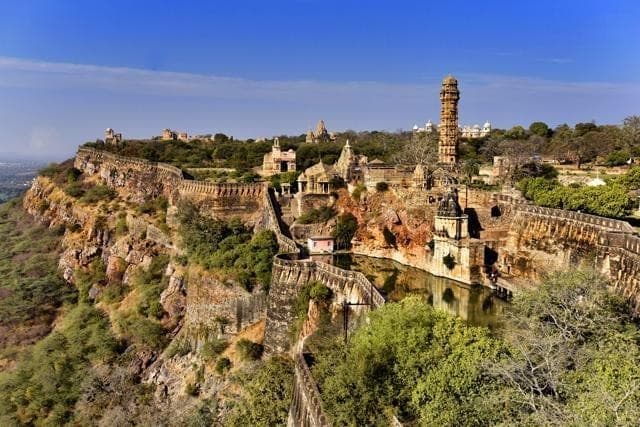
The enormous hilltop fort, with its massive walls, gateways, palaces, temples, towers and reservoirs, dominates the landscape and gives Chittorgarh its distinctive historical character. It is not simply a monument to visit—it represents an entire historic settlement that developed around a powerful fortified centre.
🏰 Why Is Chittorgarh Known as the City of Forts?
Chittorgarh is closely associated with the fortified heritage of Mewar. The famous Chittorgarh Fort stretches across a large hilltop and contains an extraordinary collection of historic structures.
Unlike a fort that stands separately from a city, Chittorgarh Fort functioned almost like a fortified city within itself. It had places of worship, royal residences, water reservoirs, defensive structures and public spaces.
Its imposing walls and gateways were designed to protect the settlement from invading armies, while its palaces and temples reflected the wealth and culture of the rulers who lived there.
For travellers interested in Indian forts, Chittorgarh offers a rare opportunity to experience history, architecture and military heritage in one enormous complex.
🛡️ Chittorgarh Fort: The Pride of Mewar

The Chittorgarh Fort is the undisputed centrepiece of the city.
Spread across a dramatic hilltop, the fort contains palaces, temples, towers, reservoirs, memorials and defensive walls. A winding road leads visitors through a series of historic gates before reaching the main areas of the fort.
The scale of the complex is what makes it so impressive. Walking through the fort feels less like visiting a single monument and more like exploring an ancient fortified town.
The fort is also part of the Hill Forts of Rajasthan, a UNESCO World Heritage Site.
🏆 Vijay Stambh: The Tower of Victory

One of the most recognizable monuments inside the fort is Vijay Stambh, also known as the Tower of Victory.
Built during the reign of Maharana Kumbha, this magnificent tower rises above the fort and is covered with detailed carvings and sculptures.
Its elaborate stonework showcases the artistic traditions of medieval Rajasthan. From a distance, the tower is an impressive landmark; up close, its intricate carvings reveal another layer of the city’s architectural heritage.
🗿 Kirti Stambh: A Symbol of Jain Heritage

The Kirti Stambh, or Tower of Fame, adds an important Jain dimension to Chittorgarh’s heritage.
The tower is decorated with detailed sculptures and religious imagery and demonstrates the diversity of traditions that flourished within the historic fort.
Its presence alongside Rajput palaces, temples and defensive structures makes the fort a fascinating example of Rajasthan’s multi-layered cultural heritage.
👑 Padmini Palace

Padmini Palace is one of the best-known attractions within Chittorgarh Fort.
The palace stands beside a water body and is associated with the famous traditions surrounding Rani Padmini and the history of Chittor.
Stories of Padmini have been passed down through historical accounts, literature and popular traditions, making the palace an important part of Chittorgarh’s cultural imagination.
Visitors are drawn here not only for the architecture but also for the stories connected with the medieval history of the fort.
🛕 Temples Inside the Fort

Chittorgarh Fort is home to several important temples that reveal the spiritual life of the historic settlement.
Among the notable ones are:
- Meera Temple
- Kumbha Shyam Temple
- Kalika Mata Temple
- Jain temples
These temples demonstrate that the fort was not only a military stronghold. It was also a place where religion, art, music and everyday community life developed alongside royal and military activities.
⚔️ A Fort With a History of Battles

The history of Chittorgarh is closely connected with major battles and sieges.
The fort witnessed several significant conflicts, including attacks associated with Alauddin Khalji, Bahadur Shah of Gujarat and the Mughal emperor Akbar.
These battles transformed the fort into one of the most powerful symbols of Rajput resistance, courage and sacrifice.
The enormous defensive walls and strategically positioned gates offer visitors a glimpse into the military importance of Chittorgarh during medieval India.
🛡️ Jaimal and Patta

The names Jaimal and Patta are deeply connected with the defence of Chittorgarh during the Mughal siege of the sixteenth century.
Their bravery became an important part of Rajput historical memory, and monuments within the fort commemorate their role.
Their story adds a human dimension to the massive walls and military architecture of Chittorgarh.
💧 A Fort With Ancient Water Systems

One of the most remarkable features of Chittorgarh Fort is its historic water-management system.
The fort contains numerous ponds, reservoirs and water bodies that helped support the population living within the fortified settlement.
This highlights the advanced planning involved in building a large city on a hill. The fort had to provide not only protection but also water, religious spaces, residences and everyday necessities.
👑 Chittorgarh and the Legacy of Mewar

Chittorgarh is deeply connected with the history of Mewar, one of the most celebrated Rajput regions of Rajasthan.
The city and its fort are associated with rulers, warriors, saints and poets whose stories continue to influence Rajasthan’s cultural identity.
Figures such as Maharana Kumbha and Meera Bai are particularly associated with the wider heritage of Chittorgarh and Mewar.
The city’s history survives through monuments as well as folk traditions, songs, legends and local storytelling.
🌅 Chittorgarh Beyond the Fort

Although the fort is the heart of Chittorgarh, the city offers a quieter experience outside its historic walls.
Visitors can explore local markets, temples and traditional Rajasthani neighbourhoods while enjoying the surrounding landscape.
The area also provides an opportunity to experience the everyday side of Rajasthan away from the larger tourist centres such as Jaipur and Udaipur.
🍛 Taste Traditional Rajasthani Food

A trip to Chittorgarh is also a chance to enjoy the flavours of traditional Rajasthani cuisine.
Popular dishes include:
- Dal Baati Churma
- Gatte Ki Sabzi
- Ker Sangri
- Bajre Ki Roti
- Rajasthani Kadhi
- Mirchi Vada
- Ghevar
- Traditional Rajasthani sweets
The cuisine reflects Rajasthan’s dry climate and long-standing culinary traditions, with dishes designed around locally available ingredients.
📸 Things To Experience in Chittorgarh
- Explore the enormous Chittorgarh Fort.
- Walk through its historic gateways.
- Admire the architecture of Vijay Stambh.
- Visit Kirti Stambh.
- Explore Padmini Palace.
- Visit the historic temples inside the fort.
- Discover the stories of Jaimal and Patta.
- See the fort’s ancient reservoirs.
- Learn about the history of Mewar.
- Watch the fort glow during sunset.
- Explore local markets.
- Taste authentic Rajasthani food.
🏰 What Makes Chittorgarh the City of Forts?
Chittorgarh’s connection with forts goes far beyond having one famous monument.
Its enormous hilltop stronghold contains defensive walls, gateways, palaces, temples, towers, memorials and water systems, creating the feeling of an entire historic city enclosed within a fortress.
The fort’s scale, architecture and connection with the history of Mewar make Chittorgarh one of India’s most remarkable destinations for exploring fort architecture and Rajput heritage.
For anyone fascinated by India’s historic forts, Chittorgarh offers an experience where every gateway, tower and stone wall carries a story.
📍 Quick Facts
City: Chittorgarh
State: Rajasthan
Popular Identity: City of Forts
Historic Region: Mewar
Main Landmark: Chittorgarh Fort
Famous Monuments: Vijay Stambh • Kirti Stambh • Padmini Palace
Known For: Forts • Rajput Heritage • Mewar History • Temples • Architecture
Cuisine: Dal Baati Churma • Gatte Ki Sabzi • Ker Sangri • Ghevar
Final Thoughts
Chittorgarh is a city where history rises above the landscape in the form of towering walls, ancient gateways and magnificent monuments.
Its fort preserves stories of kings, warriors, saints, battles, devotion and sacrifice, making it much more than a historical attraction. It is a living symbol of Rajasthan’s extraordinary architectural and cultural heritage.
🏰 Chittorgarh — The City of Forts, Where Every Wall, Tower and Gateway Tells a Story of Rajput Heritage.
Latest Post
 City of Forts in India
10/5/2026
 City of Pearls in India
10/4/2026
 City of Gates in India
10/3/2026
 City of Bridges in India
10/2/2026
 City of Black Diamond in India
10/1/2026
 Muslim Cities in India
9/30/2026
 Gold City in India
9/29/2026
 Gambling City in India
9/28/2026
 Cotton City in India
9/27/2026
 City of Rallies in India
9/26/2026
 City of Kings in India
9/25/2026
 Greenest City in India
9/24/2026
 Vegetarian City in India
9/23/2026
 Floating City in India
9/22/2026
 Dry City in India
9/21/2026