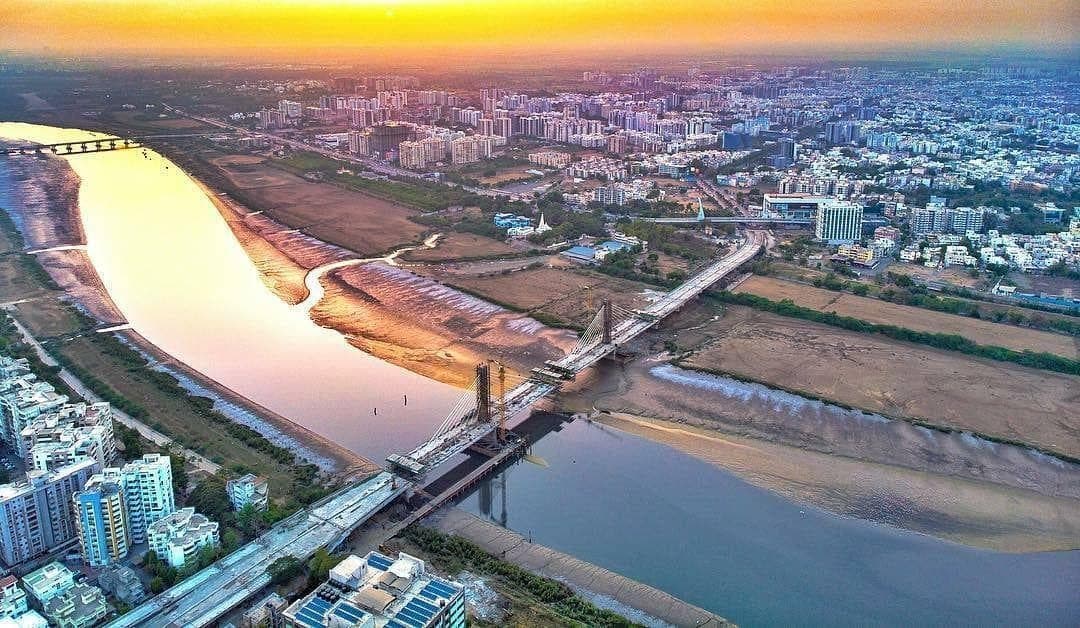
City of Bridges in India
Author : adminPublished : October 2, 2026
When it comes to India’s modern urban infrastructure, Surat in Gujarat has earned a distinctive identity as the “City of Bridges.” Located along the Tapi River, Surat has developed an extensive network of river bridges, flyovers and other crossings that connect different parts of the rapidly growing city.
The bridges of Surat are much more than transportation routes. They represent the city’s economic growth, expanding suburbs, engineering development and changing urban landscape. The Surat Municipal Corporation maintains a dedicated Bridge Cell and lists numerous bridges and bridge projects across the Tapi and other parts of the city.

🌉 Why Is Surat Called the City of Bridges?
Surat’s geography plays a major role in its bridge story. The Tapi River divides important parts of the city, making bridges essential for everyday movement between neighbourhoods on opposite banks.
As Surat expanded into a major centre for diamonds, textiles, manufacturing and commerce, the need for better east-west connectivity increased. New bridges have been developed to connect growing residential and commercial areas and help distribute traffic.
The result is a city where bridges have become a familiar part of the skyline.
The municipal bridge network includes structures such as the Sardar Patel Bridge, Pandit Dindayal Upadhyay Cable Stay Bridge, Shri Swami Dayanand Saraswati Bridge, Savjibhai Korat Bridge and several other Tapi crossings.
🌊 The Tapi River: The Heart of Surat’s Bridge Network

The Tapi River is one of the defining geographical features of Surat.
For centuries, the river has influenced the city’s settlement, trade and development. Today, it also serves as the natural setting for Surat’s impressive collection of bridges.
The bridges allow people, vehicles and public transport to move efficiently between different parts of the city. In this sense, they are an essential part of Surat’s everyday life rather than simply architectural landmarks.
The city’s mobility planning has specifically highlighted the importance of river bridges in improving east-west connectivity across the Tapi.
🏗️ Sardar Patel Bridge

The Sardar Patel Bridge is one of the important crossings over the Tapi.
It connects the Athwa Gate/Ring Road side with Adajan and was constructed as a four-lane high-level bridge. According to Surat Municipal Corporation’s technical details, the bridge is about 700 metres long and has 14 spans.
Its location makes it an important part of Surat’s road network and illustrates how bridges have supported the city’s expansion across the river.
✨ Pandit Dindayal Upadhyay Cable Stay Bridge

One of Surat’s most visually distinctive bridges is the Pandit Dindayal Upadhyay Cable Stay Bridge.
Its cable-stayed design gives the bridge a modern appearance and makes it particularly striking when viewed from the Tapi Riverfront.
The structure represents the newer generation of Surat’s infrastructure, where bridges are designed not only to improve connectivity but also to become recognizable features of the cityscape.
🛣️ Savjibhai Korat Bridge

The Savjibhai Korat Bridge connects Nana Varachha and Mota Varachha across the Tapi.
According to the Surat Municipal Corporation, the bridge is a four-lane high-level bridge measuring about 544.6 metres between the ends of its decking. It was constructed in 2001 and includes pedestrian footpaths on both sides.
This bridge is particularly significant because it connects rapidly developing areas on the two sides of the river.
🌉 Swami Dayanand Saraswati Bridge

The Shri Swami Dayanand Saraswati Bridge provides a four-lane connection between Kapodra and Utran.
The municipal corporation records the bridge as approximately 705 metres long, with four traffic lanes and pedestrian footpaths.
Like many of Surat’s bridges, its importance goes beyond its physical structure. It connects expanding residential areas and contributes to the city’s larger transportation network.
🏙️ Bridges Supporting a Growing City
Surat has transformed dramatically over the decades.
The city is internationally recognized for its diamond-processing industry and textile sector, while its population and built-up areas have expanded across both sides of the Tapi.
With this growth came a greater demand for roads, flyovers, river crossings and efficient transportation.
Bridges therefore became an important part of Surat’s urban planning. They help connect residential neighbourhoods, business districts, industrial areas and commercial markets, allowing the city to function as one interconnected urban region.
🏭 The Bridge Network and Surat’s Economy

Surat’s economy is strongly connected with textiles, diamond processing, manufacturing and trade.
Thousands of workers, traders and business owners travel between different parts of the city every day. Efficient transportation is therefore essential to the city’s commercial activity.
The bridge network helps shorten journeys between major urban areas and provides multiple routes across the Tapi.
In this way, Surat’s bridges are closely connected with the city’s identity as one of Gujarat’s major economic centres.
🌊 Bridges After Sunset

Surat’s bridges take on a completely different appearance after sunset.
The lights of the city reflect on the Tapi River, while illuminated bridges create striking views along the waterfront. Cable-stayed structures are particularly photogenic because their towers and cables form geometric patterns against the evening sky.
For photographers and visitors, the combination of river, skyline, traffic and illuminated bridges provides one of the most recognizable modern views of Surat.
🏖️ Surat Beyond Its Bridges

Although bridges are central to Surat’s modern identity, the city has plenty of other attractions.
🏰 Surat Castle
The historic Surat Castle reflects the city’s long history as an important trading centre.
🌴 Dumas Beach
Located along the Arabian Sea, Dumas Beach is one of the popular recreational destinations around Surat.
🌊 Suvali Beach
Suvali offers a quieter coastal experience and provides a different perspective on Surat’s connection with the sea.
🌳 Dutch Garden
The Dutch Garden recalls the European trading communities that were historically associated with Surat.
💎 A City of Diamonds, Textiles and Bridges
Surat is already famous for two major identities: the Diamond City and the Textile City.
The title “City of Bridges” adds another fascinating dimension.
Diamonds represent Surat’s global business connections. Textiles represent its manufacturing and trading heritage. Bridges represent its urban growth and connectivity.
Together, these identities tell the story of a city that has continuously adapted to changing economic and geographical demands.
📸 Things To Experience in Surat
- See the Tapi River bridges from the riverfront.
- Photograph the cable-stayed bridge at sunset.
- Explore the historic Surat Castle.
- Visit Dumas Beach.
- Spend time along the Tapi River.
- Explore Surat’s famous textile markets.
- Discover the city’s diamond and business districts.
- Visit the Dutch Garden.
- Taste authentic Surti cuisine.
- Explore the city after sunset when its bridges and roads come alive with lights.
🍽️ Surti Food: Another Reason to Explore the City

No visit to Surat is complete without experiencing its famous food culture.
The city is particularly known for Surti locho, a soft steamed savoury snack that has become one of its signature foods.
Other popular local flavours include:
- Surti Ghari
- Locho
- Sev khamani
- Khaman
- Surti-style farsan
- Gujarati snacks
- Traditional sweets
Surat’s food culture reflects the city’s energetic commercial personality—colourful, busy and full of variety.
🌉 What Makes Surat the City of Bridges?
Surat’s nickname is closely connected to the large and expanding network of bridges and crossings that has developed around the Tapi and throughout the urban area.
The city has bridges of different designs and generations, from older structures to modern cable-stayed and high-level bridges. The Surat Municipal Corporation’s Bridge Cell documents numerous river bridges, flyovers and ongoing bridge projects, demonstrating how central bridge infrastructure is to the city’s development.
The bridges have become part of Surat’s identity because they physically connect communities while symbolizing the city’s continuous expansion.
📍 Quick Facts
City: Surat
State: Gujarat
Popular Nickname: City of Bridges
Major River: Tapi
Other Famous Names: Diamond City • Textile City
Known For: Bridges • Diamonds • Textiles • Trade • Food
Major Attractions: Tapi River • Surat Castle • Dumas Beach • Dutch Garden
Signature Food: Surti Locho • Ghari • Khaman • Sev Khamani
Final Thoughts
Surat is a city built around movement and connection. Its bridges cross the Tapi, link expanding neighbourhoods and support the everyday movement of one of Gujarat’s major commercial centres.
From historic crossings to modern cable-stayed structures, Surat’s bridges reflect the city’s journey from an old trading centre to a dynamic, modern and economically important metropolis.
The next time you see Surat’s skyline, look beyond the buildings—the bridges tell a story of their own.
🌉 Surat — The City of Bridges, Where the Tapi Connects a City Built on Trade, Enterprise and Growth.
Latest Post
 City of Bridges in India
10/2/2026
 City of Black Diamond in India
10/1/2026
 Muslim Cities in India
9/30/2026
 Gold City in India
9/29/2026
 Gambling City in India
9/28/2026