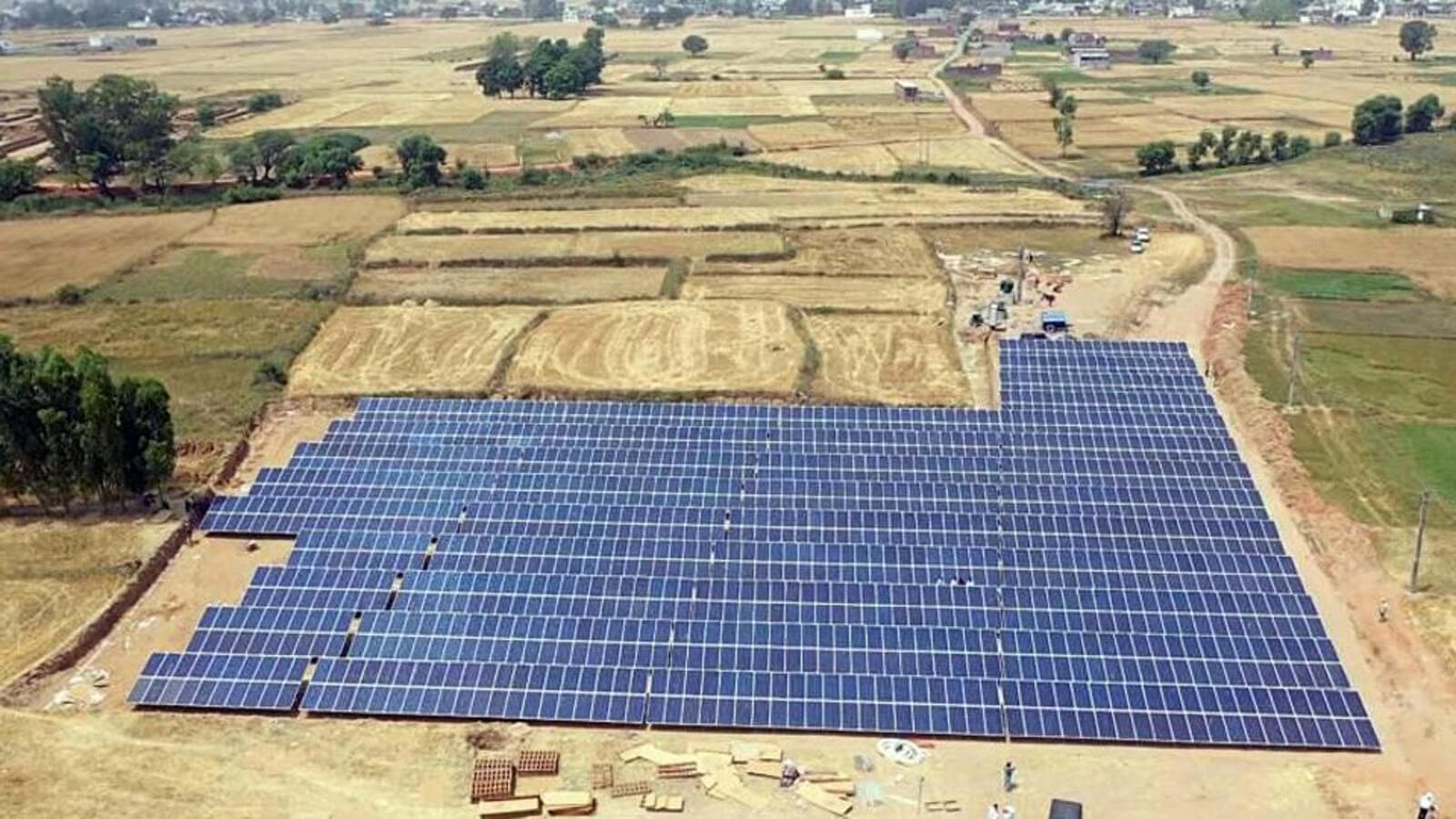
Carbon neutral village in India
Author : adminPublished : March 25, 2026
Climate change discussions are usually dominated by nations, megacities, and billion-dollar commitments. Yet, in India, some of the most effective climate solutions have emerged not from capitals or corporate boardrooms, but from small rural villages governed by gram panchayats. These villages are proving a radical idea: net-zero emissions are not a distant 2050 goal—they are achievable today.
India today hosts three distinct and verifiable village-level carbon-neutral or near-neutral experiments. At the forefront stands Meenangadi Grama Panchayat in Wayanad, Kerala, the first officially recognized carbon-neutral village in the country, launched on World Environment Day, June 5, 2016. Following Meenangadi are Dhundi in Himachal Pradesh, which claims carbon-negative status through high-altitude renewable systems, and Laksmipuram in Andhra Pradesh, an aspirational dry-land model still in transition.
Among these, Meenangadi holds primacy. Within a single year of launch, the panchayat achieved mathematically verified net-zero emissions, balancing every ton of carbon released with carbon absorbed through forests, soil, and ecological systems. This was not symbolic greening. It involved carbon audits, baseline measurements, sequestration calculations, and continuous monitoring—a level of rigor rarely seen even in urban climate projects.
What makes these villages extraordinary is not just the outcome, but the governance model. Panchayat-led climate action bypassed bureaucratic inertia, siloed departments, and fragmented schemes. Instead, villages combined local knowledge, scientific measurement, and economic incentives into an integrated system.
Together, these carbon-neutral villages form India’s living climate laboratory—a proof that sustainability can be locally governed, economically viable, and socially accepted, even in rural settings. In a nation of over 600,000 villages, the implications are immense.
| population of Himachal Pradesh | literacy rate of Himachal Pradesh | sex ratio of Himachal Pradesh |

2. Carbon Neutrality Defined: Science Versus Symbolism
The term “carbon neutral” is often used loosely, but in climate science it has a precise meaning. A settlement can only be considered carbon neutral when total annual greenhouse gas emissions are equal to or less than total annual carbon sequestration, verified through standardized measurement.
What True Carbon Neutrality Requires
A scientifically valid carbon-neutral village must meet four conditions:
- Baseline Emissions Audit
Every emission source—agriculture, household energy, transport, waste—must be measured in tons of CO₂ equivalent. - Quantified Sequestration
Carbon absorbed by trees, soil, biomass, and ecosystems must be calculated using accepted forestry and soil-science models. - Net Balance ≤ Zero
Annual sequestration must match or exceed emissions. - Independent Verification
Universities, government agencies, or certified auditors must validate results.
Most “green village” claims in India fall short on at least two of these criteria. Planting a few thousand trees, installing solar panels, or banning plastic—while positive—does not make a village carbon neutral without verified carbon accounting.
Why Meenangadi Is Different
Before launching its project, Meenangadi conducted a ward-wise carbon audit, identifying a baseline emission of approximately 2,750 tons of CO₂ equivalent per year. Only after this measurement did the panchayat design interventions aimed at both reducing emissions and expanding carbon sinks.
This scientific discipline separates climate action from climate marketing. Meenangadi did not aim to look green—it aimed to balance a carbon ledger, and succeeded.
3. Meenangadi: India’s First Carbon Neutral Village (Kerala, 2016)
Meenangadi Grama Panchayat lies in Wayanad district, part of the Western Ghats—one of the world’s most ecologically sensitive regions. With fertile soil, heavy rainfall, and forested terrain, the region already possessed natural carbon sinks. What it lacked was a systematic approach to managing emissions and sequestration.
The Vision
Launched on June 5, 2016, the Meenangadi Carbon Neutral Project set an ambitious goal:
Achieve complete carbon neutrality within four years.
The panchayat reached that goal in just one year.
Core Interventions
The strategy rested on five pillars:
- Large-scale afforestation, including a 38-acre community forest
- Organic agriculture, replacing chemical inputs
- Waste-to-resource systems, including biogas and composting
- Energy transition, most notably an electric crematorium
- Household participation, through incentives and “tree mortgage” ownership
By 2017, Meenangadi had reduced emissions to approximately 1,850 tons while increasing sequestration beyond 3,000 tons, creating a net carbon surplus.
This achievement placed Meenangadi not only as India’s first, but among the world’s earliest rural carbon-neutral communities.
4. Dhundi: India’s High-Altitude Carbon-Negative Claim (Himachal Pradesh)
Located in the Lahaul–Spiti region of Himachal Pradesh, Dhundi is a small, high-altitude settlement sitting above 3,500 meters. With just 47 households, Dhundi presents a very different model of climate mitigation.
The Dhundi Approach
Dhundi’s claim of carbon negativity rests on:
- Solar microgrids powering homes and irrigation
- Diesel elimination in agricultural operations
- Afforestation in alpine zones
- Minimal transport emissions due to geographic isolation
Its extreme altitude reduces energy demand for cooling and industrial activity, giving it a structural advantage in lowering emissions.
Verification Status
While Dhundi’s achievements are significant, its carbon-negative status remains a claim rather than a fully audited certification. Comprehensive, multi-year carbon accounting comparable to Meenangadi has not yet been publicly documented.
Dhundi therefore represents an important experimental model, especially for cold-desert regions—but not yet a benchmark.
5. Laksmipuram: Andhra Pradesh’s Aspirational Carbon-Neutral Village
Laksmipuram, located in Andhra Pradesh, illustrates the challenges of achieving carbon neutrality in dryland and semi-arid conditions.
The Laksmipuram Strategy
- Solar cooperatives at household level
- Energy committees managing village loads
- Gradual shift to organic and low-input farming
- Water-efficient tree planting rather than dense afforestation
Current Status
As of 2026, Laksmipuram has achieved approximately 60% implementation of its carbon-neutral roadmap. Tree growth rates are slower, and soil carbon accumulation is limited compared to forested regions like Wayanad.
Laksmipuram’s importance lies in its adaptation of carbon strategies to harsh ecological constraints, offering lessons for large parts of peninsular India.
6. Meenangadi’s Nine-Year Evolution: From Net-Zero to Net-Negative

Meenangadi’s success did not plateau after 2017. Instead, the village treated carbon neutrality as a floor, not a ceiling.
Phase-Wise Progress
- Phase 1 (2016–17): Net-zero achieved
- Phase 2 (2018–20): Carbon-negative status through expanded forestry
- Phase 3 (2021–26): Integration into Kerala’s Carbon Neutral LSG program
By 2026, Meenangadi’s sequestration capacity exceeded 4,100 tons of CO₂ annually, while emissions fell to approximately 1,600 tons, making it a net carbon sink.
Household-Level Economic Impact
Each household benefited financially:
- Organic farming premiums
- Tree maintenance incentives
- Reduced LPG and energy costs
- Eco-tourism income
Carbon neutrality became not an environmental burden, but an economic advantage.
7. Technical Blueprint: Systems That Can Be Replicated
Meenangadi’s greatest contribution is not its uniqueness, but its replicability.
Emission Reduction Systems
- Organic agriculture replacing chemical fertilizers
- Electric cremation replacing firewood
- Biogas plants for organic waste
- Bicycle mobility for students
Carbon Sequestration Systems
- Community forests on temple land
- Household-owned trees under the “tree mortgage” model
- Soil carbon enhancement through composting
Crucially, MNREGA workers were repurposed as a climate workforce, marking the first large-scale use of India’s employment guarantee scheme for carbon mitigation.
Meenangadi thus provides a plug-and-play climate framework adaptable to hundreds of villages—with ecological customization.
8. Governance Innovation: Panchayat as Climate CEO
One of Meenangadi’s most underappreciated achievements is not ecological, but institutional. The village redefined the role of a gram panchayat—from a scheme-implementing body into a climate governance authority.
From Welfare Administration to Climate Management
Traditionally, Indian panchayats focus on:
- Welfare delivery
- Infrastructure maintenance
- Scheme convergence
Meenangadi expanded this mandate by placing carbon accounting and environmental outcomes at the center of governance. The gram panchayat functioned as a Climate CEO, coordinating multiple departments and stakeholders under a single climate objective.
Institutional Architecture
Governance responsibilities were clearly distributed:
- Gram Panchayat: Policy direction, budgeting, carbon target setting
- Haritha Karma Sena: Solid waste management and plastic elimination
- MNREGA Workforce: Tree planting, sapling maintenance, soil regeneration
- Devaswom Board: Allocation of temple land for community forests
- Universities & Experts: Carbon audits, scientific validation
Instead of outsourcing sustainability to NGOs, the panchayat retained ownership, ensuring long-term continuity beyond political cycles.
Budgetary Innovation
State funds were not spent as one-time grants but as incentive-linked climate investments:
- Household tree maintenance rewards
- Organic farming bonuses
- Biogas and composting subsidies
This transformed climate action from a moral appeal into an economic proposition, a key reason for sustained participation.
9. Social Transformation: Building Climate Citizenship

Carbon neutrality in Meenangadi was not achieved by technology alone—it required a cultural shift. Over time, climate responsibility became a shared social identity.
Behavioral Change at Scale
The village witnessed measurable lifestyle changes:
- Elimination of single-use plastic from markets
- Widespread adoption of bicycles for school transport
- Household-level composting as a social norm
- Acceptance of electric cremation, once culturally sensitive
These shifts did not emerge overnight. They were reinforced through:
- Repeated gram sabha discussions
- School-based environmental education
- Public recognition for compliant households
Tree Mortgage: Ownership Over Abstraction
One of Meenangadi’s most innovative ideas was the tree mortgage system. Instead of treating forests as abstract carbon sinks, households were assigned personal responsibility for specific trees.
This created:
- Emotional ownership
- Long-term care incentives
- Intergenerational stewardship
Climate action became personal, visible, and measurable.
Women as Climate Leaders
Women’s self-help groups evolved from traditional income activities into:
- Vermicompost producers
- Organic input suppliers
- Waste management supervisors
In effect, women became the operational backbone of the carbon-neutral economy, ensuring both social inclusion and project durability.
10. Challenges Overcome: The Reality of Rural Climate Action
Meenangadi’s journey was not frictionless. The project faced resistance, technical hurdles, and cultural hesitation—challenges typical of rural India.
Major Obstacles
- Farmer Resistance to Organic Farming
Many farmers feared yield loss and income instability. - Tree Survival Rates
Initial plantation drives saw survival rates below expectations. - Cultural Sensitivity Around Cremation Practices
Shifting from wood-based cremation faced emotional opposition. - Funding Gaps and Administrative Delays
Climate projects rarely fit neatly into existing schemes.
Solutions That Worked
- Demonstration farms proved organic viability before scaling
- MNREGA follow-ups ensured tree survival exceeded 70%
- Extended community dialogues normalized electric cremation
- Scheme convergence pooled funds across departments
The key insight: climate action in villages is 80% social negotiation and 20% technology.
11. National Scaling Blueprint: What 600,000 Villages Can Learn
Meenangadi’s success raises a critical policy question: Can this model scale nationally?
The answer is yes—with adaptation.
Replication Framework
A phased approach is most viable:
- Phase 1: 100 carbon-neutral panchayats per state
- Phase 2: District-level clustering of climate villages
- Phase 3: Integration into national climate targets
If even 10,000 villages adopt Meenangadi-like systems, India could sequester over a gigaton of CO₂, significantly advancing its global climate commitments.
Policy Recommendations
- A Carbon Neutral Panchayat Mission at the national level
- Dedicated carbon audit units linked to universities
- Expansion of MNREGA as a climate mitigation workforce
- Long-term incentives instead of short-term plantation drives
Meenangadi proves that local governance is faster and more accountable than centralized climate programs.
12. Economics of Carbon Neutrality: From Cost to Value
Contrary to common belief, Meenangadi’s climate transition was not financially draining—it was economically rational.
Cost Structure
Initial investments focused on:
- Afforestation
- Organic farming inputs
- Waste infrastructure
- Renewable systems
These costs were front-loaded but limited in scale.
Returns Generated
Over time, households gained:
- Higher crop prices through organic certification
- Reduced energy expenses
- Income from eco-tourism and green enterprises
- Tree maintenance incentives
At the panchayat level, returns exceeded annual operating costs, making the system largely self-financing after the initial phase.
This establishes carbon neutrality not as charity, but as a viable rural development strategy.
13. Global Benchmarking: How Meenangadi Compares Internationally
Globally, only a handful of communities have achieved verified carbon neutrality.
What distinguishes Meenangadi is not technological sophistication, but cost efficiency and governance structure.
| Feature | Meenangadi | Typical Global Model |
| Governance | Local panchayat | Municipal authority |
| Cost per capita | Very low | Extremely high |
| Energy source | Mixed (bio + forest) | Mostly solar/wind |
| Community participation | Universal | Partial |
Meenangadi demonstrates that developing countries can lead climate action, not follow.
14. Visiting Carbon-Neutral India: Climate Tourism with Responsibility
Meenangadi has emerged as a learning destination, not a conventional tourist spot.
What Visitors Experience
- Guided forest walks
- Organic farm interactions
- Carbon audit demonstrations
- Gram sabha participation
Visitors often plant a tree as part of a carbon offset contribution, reinforcing ethical engagement.
Responsible Tourism Principles
- No plastic usage
- Community-based homestays
- Local produce consumption
- Respect for village routines
Tourism here is not spectacle—it is education through immersion.
15. Conclusion: When Villages Lead the Climate Fight
Meenangadi, along with Dhundi and Laksmipuram, dismantles a powerful myth: that climate leadership must originate from cities, corporations, or global summits.
Instead, these villages show that:
- Local governance can deliver global impact
- Climate neutrality is achievable now, not decades later
- Economic growth and ecological balance can coexist
Meenangadi’s equation is simple yet profound:
Scientific measurement + community ownership + economic incentives = sustained net-zero
In a world struggling to meet climate deadlines, India’s villages are quietly showing the way forward—one panchayat at a time.
Latest Post
 Pink City of India
9/20/2026
 Riverside Cities in India
9/19/2026
 City of Seven Hills in India
9/18/2026
 Historical Cities In India
9/17/2026
 Most Suicidal City In India
9/16/2026